Power Is Fire: Jeffrey Pfeffer on Why Good Work Is Not Enough
Why do capable people resist learning how power works, even when that resistance leaves them with less influence over their careers and organizations?
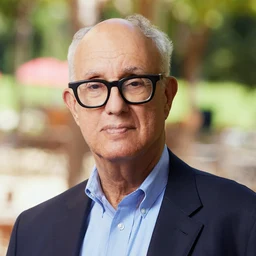
About the Guest
Jeffrey Pfeffer is the Thomas D. Dee II Professor of Organizational Behavior at Stanford Graduate School of Business. His work examines power, leadership, evidence-based management, the knowing-doing gap, and how work and organizations affect people. His books discussed in the episode include 7 Rules of Power, Leadership BS, Dying for a Paycheck, and The Knowing-Doing Gap.
In This Episode
- Why power is a tool that can be used for good or ill
- How applying principles of power creates leverage
- Why knowledge of influence and cognitive bias does not make people immune to either
- The progression from denial and anger to acceptance and agency
- Why the just-world assumption can obscure how recognition actually works
- Why invisible work fails both the person doing it and the team that depends on receiving credit
- How self-advocacy can be reframed as advocacy for a team and family
- Why relationships and distribution may become stronger business moats as AI lowers the cost of reproducing products
About This Conversation
Stanford professor Jeffrey Pfeffer joins Alexander Powell to explain why power is a tool, why excellent work remains invisible unless someone advocates for it, and why relationships may become more valuable as AI makes products easier to reproduce.
They discuss why many professionals recoil from power even when that leaves power to people they distrust. Pfeffer explains why applying the principles matters more than merely knowing them and describes the movement from denial and anger to acceptance and agency.
The conversation then turns to the just-world assumption and the professional cost of invisible work. Pfeffer argues that good work cannot help a person or a team if nobody sees it. Advocating for your work can also mean advocating for your colleagues and family, not simply promoting yourself.
Finally, they consider business defensibility in the age of artificial intelligence and why relationships, distribution, and the ability to reach people may become even more important.
Watch the Episode
Resources & Links
- ERISA and the Failure of Employers to Perform Their Fiduciary Duties: Evidence from a Survey of Health Plan Administrators (with Barak Richman, Amy Monahan, and Sara Singer; Journal of Law, Medicine & Ethics, 2026)
- Jeffrey Pfeffer’s official website
- Jeffrey Pfeffer at Stanford Graduate School of Business
Next on Cited Authorities
Ben Tompkins →Get the Complete Conversations
The Full Subscriber Edition is $9 a month or $90 a year. Paid members get the complete video of this conversation and every new Subscriber Edition.
Get the Full Subscriber Edition