What 300 Jury Trials Teach You About Cross-Examination | Robert C. Bonsib
A former prosecutor turned criminal defense attorney with 300-plus jury trials to verdict, the Heeney Award for Lifetime Excellence in Criminal Law, and a Fellowship in the American College of Trial Lawyers.
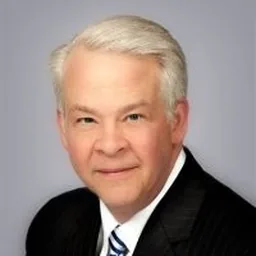
About the Guest
Robert C. Bonsib is a co-founder of MarcusBonsib LLC, where he has practiced criminal defense law since 1990. Over the course of his career he has tried more than 300 jury cases in state and federal courts across Maryland and the District of Columbia.
Bonsib began his legal career in 1974 as a law clerk and then assistant state’s attorney in the Prince George’s County State’s Attorney’s Office under State’s Attorney Arthur “Bud” Marshall. In 1983 he joined the United States Attorney’s Office as an Assistant United States Attorney. He returned to Prince George’s County in 1987 as the Deputy State’s Attorney under then-State’s Attorney Alexander Williams Jr., who had won a historic election as the first Black person elected to a countywide office in Prince George’s County. Judge Williams was later appointed to the United States District Court for the District of Maryland. After sixteen years in prosecution, Bonsib entered private practice and co-founded his firm with Bruce Marcus, a former public defender.
Bonsib is a Fellow of the American College of Trial Lawyers and a recipient of the Heeney Award for Lifetime Excellence in Criminal Law. He has served for more than twenty years on the Prince George’s County Judicial Nominating Commission. His representation of Daniel Beckwitt, alongside co-counsel Megan E. Coleman, produced a landmark decision by the Supreme Court of Maryland on depraved heart murder, and the case remains the leading authority on that issue in the state.
In This Episode
- Walking into the Prince George’s County State’s Attorney’s Office in 1974 and the unwritten rules of the courtroom
- Three jury trials and a court trial in a single day under Judge Ralph Powers
- Going federal: four years as an Assistant United States Attorney and the era before sentencing guidelines
- Returning to Prince George’s County as Deputy State’s Attorney under the Honorable Alexander Williams Jr. after a historic election
- Leaving prosecution after sixteen years and building a defense practice with Bruce Marcus
- The Beckwitt case: depraved heart murder, a landmark reversal, and the leading Maryland authority
- Cross-examination philosophy: preparation, flexibility, and knowing when not to ask a single question
- Maryland’s expanding voir dire: the Charles County pilot project and the power of the strong feelings question
- Collapsing trial rates, the pressure for defendants to plead guilty in federal court, and why losing a trial can still mean winning at sentencing
- Twenty years on the Judicial Nominating Commission and what actually makes a great judge
- The law school class that should exist: “What They Don’t Teach You in Law School”
- The trial lawyers who shaped the profession: Louis Nizer, Earl Rogers, Clarence Darrow, and Edward Bennett Williams
Career lessons from 300-plus trials: prosecutor to defender
You have to learn to lose a lot more when you're a defense lawyer than when you're a prosecutor. Victory is defined in different ways. Keeping the jury out longer than expected is a moral victory. Getting a lesser count of conviction or a reduced sentence, you define victory in different ways.
Robert C. Bonsib
Timestamps
- 0:00 Introduction
- 0:21 Starting Under Bud Marshall in 1974
- 2:11 Unwritten Courtroom Rules
- 3:55 Three Jury Trials in One Day
- 6:05 Going Federal as an AUSA
- 7:41 Back as Deputy State’s Attorney Under Alexander Williams Jr.
- 8:43 Switching to Criminal Defense
- 9:43 Partnering With Bruce Marcus
- 11:02 Expanded Voir Dire in Maryland
- 15:09 The Art of Cross-Examination
- 19:40 The Beckwitt Case
- 23:58 Trial Rates & Client Strategy
- 25:39 What They Don’t Teach You in Law School
- 29:14 Choosing & Evaluating Judges
- 31:32 Books That Shaped a Trial Lawyer
Resources & Links
People Mentioned
- Hon. Alexander Williams Jr., Prince George’s County State’s Attorney (1987–1994), U.S. District Judge, District of Maryland (1994–2014)
- Hon. Ralph Powers, 7th Judicial Circuit (1960–1976), Chief Judge (1971–1976)
- State’s Attorney Arthur “Bud” Marshall, Prince George’s County (1962–1986)
Books Discussed
- The Man to See by Evan Thomas, biography of Edward Bennett Williams
- My Life in Court by Louis Nizer, memoir of one of the twentieth century’s most celebrated trial lawyers
- Final Verdict by Adela Rogers St. Johns, a daughter’s memoir of legendary trial lawyer Earl Rogers
- Attorney for the Damned edited by Arthur Weinberg, Clarence Darrow’s courtroom summations
Transcript of the Opening Conversation
Read the opening transcript
ROBERT BONSIB: I always thought that if I were not practicing law, I would love to go to law school and teach a class called What They Don't Teach You in Law School, because there are so many things that I think would be helpful for younger practitioners to know and to hear about.
ALEX POWELL: Bob, you walked into the Prince George's County State's Attorney's Office in 1974. Bud Marshall had been running that office for over a decade by then. He started with six part-time assistants and built it into a real office. What was it like when you showed up?
ROBERT BONSIB: Well, I showed up initially as a law clerk, so I had the opportunity for about six months before I was sworn in as an assistant state's attorney to work with Bud Marshall. I was not sort of hand in glove because I was only a law clerk, but he allowed me to participate in a couple of very serious major cases in terms of putting case files together, being present in the courtroom during the trial of the case.
I got the opportunity to see how a jury trial works, not from the perspective of what they teach you in law school, but seeing how the nuts and bolts sort of build together to get a jury. And so that six months was invaluable when I became an assistant, was sworn in as an assistant in the summer of '74.
I didn't have to worry about what the next steps are when you're in a courtroom, particularly how things worked in Prince George's County because I had had the benefit of seeing them upfront. So that was a really important opportunity I was given and I think gave me a real headstart in terms of being able to jump in pretty quickly in terms of understanding not what the rules are, but sometimes more importantly, what the unwritten rules are in a courtroom, how judges operate and how the things occur that are not written down in any book anywhere.
ALEX POWELL: What are some of the most important unwritten rules that a young prosecutor, defense attorney, and public defender should know?
ROBERT BONSIB: Well, I don't think there's any standard set of unwritten rules. I think what is important is to understand how the judge you're in front of works, how the system works. I travel around to a lot of different counties and procedural things, scheduling, continuances, pretrial conferences, they all seem to be doing their own thing. Some of the judges are a lot easier to work with. You go in front of an administrative judge for a continuance in some counties, and you and the state are in agreement on what needs to be done, and the judge is very cooperative in going along with what the lawyers have agreed to.
And in other places it can be more of a struggle when judges seem to be more statistics driven. They don't want to continue a case or they don't want to continue it for as long as you want to have it continued. Those are the things you don't find written down and they change over time, but you need to know what the lay of the land is.
The value of being a prosecutor or a public defender is that you're in the same courthouse all the time, and you can learn that stuff relatively quickly. But when you're popping around from one county to another, unless you're in those other counties regularly, you never know what the changes in the rules may be. A new administrative judge gets appointed and they have their own way of doing things. So that's always an important thing to know and to understand, that you won't find in books.
ALEX POWELL: Is there one case or one memory from those Bud Marshall years that sticks out to you?
ROBERT BONSIB: I was fortunate enough to be assigned early on in what they called the criminal appeals unit. So the cases that were jury-prayed from the district court or appealed from the district court into the circuit court would end up in my lap, and that was back in the day when there was only one person generally doing that. It really gave me the opportunity to have a lot of experience. I guess one thing I always will remember was in front of Judge Ralph Powers, who was a really great judge, but he was a guy who moved his docket along.
And I had some jury prayer cases that day in front of him, and we managed to try three jury trials and one court trial in one day in front of him. Now, these were not heavy duty cases. They were basically like one witness, maybe one police officer or two police officers. And maybe the defendant testifies or maybe he doesn't, but we would be giving a closing argument in one case and there would be the first three rows of the courtroom filled with the jurors for the next case.
We moved them quickly and you can't get a jury trial done in most places in one day anymore. But that was quick. And back in those days, juries were kept out. There were times when they had jury deliberations in cases all through the night. The judge had kept them all night long in a death penalty case, and they eventually, I think, deadlocked. But now most of the time, for reasons of finances, they don't keep juries beyond five or six o'clock.
ALEX POWELL: Bob, in 1983, you made a move that a lot of state prosecutors think about but most don't make. You became an Assistant United States Attorney. What caused that decision for you?
ROBERT BONSIB: Well, after nine years in the State's Attorney's Office, I'd handled all the kinds of different cases you could handle. And the prospect of going and becoming a federal prosecutor was challenging and exciting. And I was fortunate enough to have somebody in that office who sort of vouched for me and helped me get that position under the U.S. Attorney.
And it turned out to be just a wonderful experience. Frankly, I think compared to what federal prosecutors have had to deal with, and I'm not just talking about in the last year, but since probably around 1987 when the federal sentencing guidelines came into play, and now prosecutors have to get approval up the chain of command for whatever they do.
I had an office in the far corner of the U.S. Attorney's Office. I handled my own cases. As long as I didn't screw up, I could do what I wanted. I gave people no-prosecution agreements to cooperate. And there were not layer upon layer of approval or policies that restricted my judgment. They basically trusted you to make good decisions and not create a mess.
ALEX POWELL: You come back to Prince George's County in 1987 as the Deputy State's Attorney under the Honorable Alexander Williams. He had just pulled off a historic upset, defeating Bud Marshall after 24 years in office. Judge Williams was the first Black person elected to countywide office in Prince George's County. What was it like for you stepping into that transition?
ROBERT BONSIB: Well, it was actually not difficult at all. I mean, I was in some respects coming back home to the place where I had grown up as a lawyer. And I knew, still knew a lot of the people. So when I came back I didn't have to learn the office. I didn't have to get introduced to most of the people. The difficult part of the transition is learning to be a personnel manager as well as a lawyer. And that was not something I had experienced.
ALEX POWELL: You had been a line prosecutor, a federal prosecutor, how did you go from being the one who puts people in prison to being the one who fights to get them out?
ROBERT BONSIB: I found the transition very easy, and I've talked to a lot of my colleagues over the course of the years that have made that transition. And some have made the transition easily and for some it hasn't been quite so easy. But if you look at yourself as a lawyer who has a client, whether it's the state and its citizens or it's an individual, and you enjoy practicing law, trial law, it was very easy.
You have to learn to lose a lot more when you're a defense lawyer than when you're a prosecutor. Victory is defined in different ways. Keeping the jury out longer than expected is a moral victory. Getting a lesser count of conviction or a reduced sentence, you define victory in different ways.
ALEX POWELL: You went into business with Bruce Marcus, who had been in the Public Defender's Office against you in cases, I'm sure. How was that transition to going into business with someone who had been on the other side of the courtroom for years?
ROBERT BONSIB: Well, it happened because when I had decided that I was going to go into private practice, I made it known maybe six months before I was planning to leave. And I talked to a number of lawyers on the other side, if you will, that I respected. Bruce was one of them, asking how things work and just trying to get advice and guidance.
And in the course of those conversations, we came to a point where we both thought it would be a good thing for me to join with him. And it was very fortunate for me because I didn't have to learn the ropes of private practice on my own. I had a person who really knew it. And back in those days, Bruce, when he was with the Public Defender's Office, they were allowed to have a part-time private practice as well.
So he had been in a firm, he had been doing a variety of types of cases. Unlike my practice, which is almost exclusively criminal, he did business law, he did personal injury work, he did criminal work, and he also had an office that was already set up and running. So it was easy to move in.
ALEX POWELL: Bob, you've done 300-plus jury trials. The vast majority of lawyers throughout their whole careers won't do five. What are your thoughts on the adoption of the expanded voir dire process in Maryland?
ROBERT BONSIB: I was fortunate enough to be able to participate last year in front of one of the judges that was participating in the expanded voir dire project. And so that was a very interesting experience, because as you know, in Maryland our voir dire is much more limited in terms of lawyer involvement.
We get to propose questions for the judge to ask, and we might get the opportunity to have some follow-ups when jurors are questioned, but we don't do the kind of extensive sort of person-to-person voir dire that exists in other states. So in the voir dire project in the case that I had, and this was down in Charles County, the judge allowed us to prepare a written questionnaire with our voir dire questions. And so the state and I put together a questionnaire, probably 40, 50 questions. And when the jury was brought in in the morning, they were all given the questionnaire, asked to fill it out.
And then the judge collected all of the questionnaires. The jury was excused for a couple of hours so the lawyers could look through the questionnaires and the answers. And then the jurors were brought back up and questioned individually by the judge. And we had the benefit of the questionnaires, so we knew, you would know right off the bat certain people that are not going to be qualified and others who in their answers clearly need to have further questions asked. And so we went through that process and I found that to be really, really helpful because you really got to know the jurors for the most part and get good information about them.
ALEX POWELL: The case law on compound questions and strong feelings, Collins I and Collins II, I believe, are the cases in Maryland. What are your predictions on how stare decisis will evolve with the expanded voir dire process now in Maryland?
ROBERT BONSIB: The strong feelings question has been a really important question to be able to ask. And I still have to remind myself when I'm putting voir dire questions together to be aware of the compound question thing, because going back to the old days, it's almost automatic to think in a compound way.
And you can't do that. But with the strong feelings question and the fact you can't do a compound question, you really do get a lot, and particularly I found in child abuse, sexual abuse kinds of cases. The strong feelings question when it's not done in a compound way can generate an awful lot of responses.
In a drug case, you might pick a jury in a couple of hours if you get strong feelings. In a child abuse case, most of the time we're spending all day and the number of people who respond to both having strong feelings or either personal or family or friends who have been victims of sexual abuse, it's a lot. And it takes a while to talk to those folks.
ALEX POWELL: I'm thinking of course about my time as a prosecutor as well. You hear people's most tragic stories during voir dire. But it also does cause a sense of hope in the justice system that the citizens are willing to come forward and let the judge know, let the parties know, I have reservations about deciding this case because of this awful thing that happened to them or their family member years ago.
The conversation continues in the Subscriber Edition.
Robert C. Bonsib turns next to cross-examination, the Beckwitt case, trial strategy, law-school lessons, judges, and the books that shaped him.
Next on Cited Authorities
Ellis Duncan: Leading Georgetown Law’s Graduate Tax Program →Ellis Duncan
Continue with Robert C. Bonsib
The Full Subscriber Edition is $9 a month or $90 a year. Paid members get the complete video of this conversation and every new Subscriber Edition.
Get the Full Subscriber Edition