Construction Law and Running a 1,000-Person Company | Lisa D. Sparks
A first-generation college student who finished law school at 22, built a construction litigation practice from scratch, and now runs operations for a company with over a thousand employees.
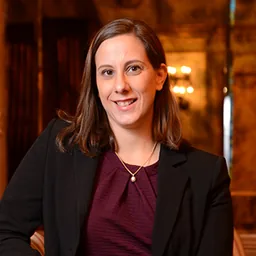
About the Guest
Lisa D. Sparks is the Chief Administrative Officer at Schuster Companies, where she oversees operations for a company with over a thousand employees. She was the first in her family to finish high school, college, and law school, completing her J.D. at the University of Baltimore at 22.
After law school, Sparks built a construction and surety litigation practice, then served as in-house counsel through a private equity acquisition. She joined Schuster Companies expecting to serve as general counsel and was instead named its chief administrative officer.
Sparks has taught commercial law at the University of Baltimore School of Law and co-founded Rosie the Lawyer, a mentorship program for Baltimore City high school girls.
In This Episode
- From parallel enrollment to finishing law school at 22, and the mentors who made it possible
- Building a construction litigation practice during the 2008 financial crisis and winning a $5 million defense verdict in a federal surety case
- Turning an opposing party into a client at a networking event at Cross Street Market
- Serving as first in-house counsel at a software company, then supporting a PE-backed acquisition and divestiture
- Walking into Schuster Companies expecting to be general counsel and learning she was the new CAO
- Twenty-three years connected to the University of Baltimore: from undergrad to adjunct professor of commercial law on Judge Smalkin’s recommendation
- Judge Smalkin’s mentorship: five career milestones traced back to showing up prepared for an 8 a.m. class
- Co-founding Rosie the Lawyer, a mentorship program for Baltimore City high school girls
- Measuring success by the distance between where you started and where you are now
Career lessons on saying yes, mentorship, and measuring your own progress
It doesn't matter what kind of practice area it is. You're going to take that and be excited about it because you're going to get great training and great experience and you can always pivot to something else later.
Lisa D. Sparks
Timestamps
- 0:00 Intro
- 0:13 Growing Up & Early Ambitions
- 3:38 Family & Work Ethic
- 4:29 Path to Law School at 22
- 5:42 Youngest in the Class
- 6:23 Teaching at UB Law (with Prof. Bob Lande, Prof. Jack Lynch & Prof. Byron Warnken)
- 10:14 23 Years at the University of Baltimore
- 11:58 Starting at Whiteford in the 2008 Recession
- 14:52 What Construction Disputes Look Like
- 16:07 Turning an Opposing Party into a Client
- 18:06 Software Company & General Counsel
- 21:36 Schuster Companies & the CAO Surprise
- 24:55 The Hardest Part of Running a Business
- 28:14 The Rosie Program (with Wendy Geist)
- 33:05 Career Reflections & Mentorship (with Judge Smalkin)
- 35:23 The Only Metric That Matters
Transcript of the Opening Conversation
Read the opening transcript
ALEX POWELL: You finished your JD at age 22.
LISA SPARKS: The $5 million defense verdict.
LISA SPARKS: One thing I figured out is that the only way to judge my accomplishments...
ALEX POWELL: Lisa, you were voted most likely to be the first woman president in fourth grade.
LISA SPARKS: It was interesting because at that age, nine maybe, we still have kind of crazy ideas about what we want to be when we grow up. I think at that point I maybe wanted to be a ballet dancer, which is not the most realistic goal for the average person, certainly not me. And I think a lot of kids at that age want to be a musician or a professional athlete or those sort of larger-than-life kind of occupations. But being voted most likely to be the first woman president in my class was a little bit of a turning point, I think, and got me a little bit more interested in thinking about higher education and pathways to a more professional career.
I come from a long line of very smart, hardworking, successful, accomplished people who don't necessarily look that great on paper. My brother and sister, who are older than I am, both have been super successful, probably more successful than I am, and they both completed their GEDs and went into the workforce early and built up their professional reputations in the workplace rather than with a transcript. And so obviously I was on a little bit of a different path. I was really dedicated to school, from elementary all the way up through high school.
And as I was getting to that age and I was starting to work myself, I was struggling a little bit balancing a full-time job and full-time high school with advanced placement classes and all of that. And I had this one administrator who took a bit of an interest in me. Her name was Sandy Thomas. She was vice principal at my high school, and she put me on a special project that had to do with figuring out the schedule for the school for the following year, which was a complicated task on a DOS-based sort of -- I think it was an Access database system that tried to reconcile all of these conflicts and what students had asked to sign up for and what was available. And she sort of interjected some mentoring in there, and she felt really strongly that I should go to Virginia Tech. And I still don't know why. Honestly, that is not a school that I ever seriously considered. But whatever it was, just having some of those conversations about the timing and expectations and putting the pieces in place was super helpful.
And I was in a cohort of students at my very, very large high school, but in a subgroup of maybe 35 or 40 kids that were all gifted and talented and tracking. Many of my classmates went to Ivy League schools. Many of them had full rides, a couple are physicians now and people doing really spectacular things. And so being in that group, that's where everybody was going. That was sort of the assumption, and I just sort of followed suit with everybody.
But in terms of figuring out for myself, I read a lot. And I joke all the time that so much of what I figured out was by reading the college catalogs, which I don't think anybody publishes anymore, but they were definitely a thing 25, 30 years ago. Even my path to law school -- people ask about how I got to law school early. Well, the University of Baltimore published a paperback catalog at the time, and I read it cover to cover and there was a program in there and I found the application and I filled it out and I submitted it. I didn't invent anything. I just read the catalog.
ALEX POWELL: There's a theme with your initiative. You determined that reading through this college catalog, this is the future for me. This is what I want. You also -- your family also very successful. Not in the same field, but success looks different to different people.
LISA SPARKS: So I think that one of the big things I saw with my older siblings, with parents, was really hard work and dedication and taking ownership of your job. Even when I was really young, working at Pizza Hut, which coincidentally my brother and my mother had also worked there at times before I did, and just really taking responsibility and asserting yourself and learning more, doing more, moving up. And that has paid off in dividends over the course of my career. Certainly, as an attorney, if you don't take ownership over your files, you're not practicing in a competent way.
ALEX POWELL: You finished your JD at age 22. Summa cum laude.
LISA SPARKS: The way I accomplished that was actually pretty straightforward. So Sandy Thomas had recommended to me that year that I was working for her -- I think it was just a semester I worked for her during a class period -- that I considered the parallel enrollment program. So instead of going to high school my senior year, I went to community college, and that's a pretty well-established program today. Maryland high school students can go for free. I had to pay 50% tuition because we're going back a couple of decades.
And then at the end of my college career is when I found that magic page in the UB catalog that said I could do the same thing with college and law school. So I shaved off a year by doubling up from high school to college, and then I shaved off another year by doubling up from college to law school. So the whole deal -- college and law school -- 5 years. So I only took normal course loads. I just managed to get classes to count for double things. So my first year of law school, all of my 1L classes, completely normal schedule, also were credits towards my bachelor's degree. I walked with my bachelor's after I took my first year finals.
I was definitely the youngest person in the class at the time. I think the average age at UB at that time was about 31, which is pretty typical. The law school has a lot of traditional students coming right out of college, but it also has a lot of non-traditional students coming after a master's degree, a couple years out in the working world. And so I was the youngest in the class, and my study partner was a retired police officer. And so he was one of the oldest in the class. And they jokingly called us the bookends of the class.
ALEX POWELL: What is it like to attend a law school, graduate not only summa cum laude -- I believe you were the valedictorian, weren't you?
LISA SPARKS: I was. Yeah. For both my UB degrees actually.
ALEX POWELL: To succeed at that level and then to go back and teach. What fueled that decision?
LISA SPARKS: So when I was in my clerkship after I graduated, I had picked up an adjunct teaching job at the community college in the paralegal program there. I was actually hooked up with that through that study partner of mine. He had been teaching at the community college for several years, and I started teaching legal research and writing to undergrads. And that was a great experience to get in the classroom. Picked up a few other courses there over the time period. It was also a great way to supplement my law clerk income because that has never been the best paying job in the world.
And I got a call from Jack Lynch, who was the associate dean of academic affairs at the time. I knew Jack, but I had not taken any of his classes. And he called me totally out of nowhere when I was practicing at Whiteford Taylor Preston in 2010. And he asked if I'd be interested in teaching commercial law at night. And he had no idea that I had been teaching at the community college. All he knew is that I'd been recommended by Judge Smalkin, who was one of those professors that I was really close with and had somewhat stayed in touch with, along with Byron Warnken, who I also was close with and stayed in touch with throughout the rest of his life.
And so I met with Jack. He came downtown. He bought me a sandwich at the old Java Joe's on Baltimore Street and we talked about it, and then he shipped a copy of the book to my house and told me I'd start teaching in the fall. The call came to me, which is so interesting because I've had dozens of people ask me over the years, "Oh, how did you apply? How did you get to do that?" I think it was really happenstance. They needed somebody and they couldn't find somebody. And so Judge Smalkin said, "Well, what about Lisa Sparks? She was a good student. She liked my class. Maybe she could do it." And I just happened to pick up the phone when the call came.
ALEX POWELL: I remember that class was pretty late when I took it. It was commercial law. After working at a law firm all day, you would come on campus and then teach.
LISA SPARKS: I remember the first semester I taught. It was the evening program and I think I was actually on the late shift teaching 7:45 to 9:35 at night. I was in the old law building, which, some folks will tell you is the new law building, the one that was built in 1980. For me, it's the old law building. It's the one I attended classes in. And that's the first couple semesters I taught over there before the new one was finished. I still remember I was in room 207, which was the class that I was in for my very first law school class. That was torts with Bob Lande on Monday mornings at 10:00. So that was class number one when we started in August.
And I was the youngest person in the room. I had a room full of evening students. I was 25 years old and I was the youngest one there. And it was definitely a little scary. I had been in the classroom, but teaching at the community college was a little different. The classes were smaller because I was teaching research and writing. It had a little more of a workshop feel to it. And so lecturing was a whole different ballgame.
And I had the textbook that was recommended to me the first semester, and I tried to sort of capture the essence of the way Judge Smalkin taught me that subject, and it was okay. It wasn't great, but it was okay. My class was observed by a full-time faculty member who gave me some feedback. Then I taught it again the next semester and I tried a different book which was an absolute disaster. I was trying to save the students some money, so I switched to a loose leaf and it was just terrible. So then I went to a different book altogether that was more similar to the first one but had great problems in it. And that third semester is when everything really fell into place for me. So I had two good semesters of teaching notes, and every night after class I would capture what happened in the class period so that I could make adjustments the following semester. And I got a really good problem set, and from there on out it just kind of flowed.
I've actually been at UB now in some capacity or another for 23 years. I started as an undergrad in May of 2003, then went right to the law school. Then I joined the law alumni advisory council when I graduated. Then I came back to teach. I adjuncted for several years before I was the full-time practitioner in residence, then back to adjuncting in the alumni society. And I have a lot of really amazing memories, but maybe one that stands out is an early memory of taking a field trip to the Supreme Court when I was in undergrad.
LISA SPARKS: I've been there since. I've been sworn into the Supreme Court bar. I've had a couple of petitions for cert. I've never actually argued there because I was successful opposing them.
LISA SPARKS: I touched on that a little bit, but we went as a group. It was the jurisprudence club, my undergraduate program, and somebody got us in. I don't even remember who it was or how they did it, but somebody got us in. I think an alum of the jurisprudence program was actually like a security guard at the Supreme Court or something. I think that's what it was. And they were arguing whether student loans were dischargeable in bankruptcy that day. So it was such a coincidental day for a bunch of college students to be visiting.
But I think that was really the first time that becoming a lawyer felt real and felt like it was within reach for me -- was that day in undergrad, going to the Supreme Court and listening to an argument and meeting some staffers there. And it just really started to be tangible at that moment.
LISA SPARKS: When I got the opportunity to interview at Whiteford, I was clerking for Judge Eyer and I was looking for a job, and it was not a good time to be looking for a job.
ALEX POWELL: What year was this?
LISA SPARKS: 2007. It was December of 2007. I had taken the bar in July, started clerking in August, started applying for jobs earnestly right away, and nothing. There were no listings. Back then we still had job ads in the newspaper, believe it or not. And the Daily Record had nothing. Secretarial jobs would say "JDs need not apply" in the job ads. The large firms were rescinding offers. Every level of government -- federal, state, and local -- were on hiring freezes. No natural attrition meant no openings at the bottom. It was just a terrible time to be starting a career.
And so I had done informational interviews at a few firms that fall. They did it as a courtesy. Judge Eyer had worked at Whiteford, so of course they're going to give her clerk an informational interview. And I had met with them and they were really nice, and they're like, "Yeah, we just don't think we're going to be hiring anybody, but thanks for your interest."
And then magically somebody quit in December and I get a call from their recruiter who said, "Hey, would you like to come in and interview with the construction and surety department?" I'm like, "That sounds amazing. I would love to do that." And I scurried downstairs to the basement of the Court of Appeals building to look up surety because I didn't know what it was. I had heard it. I had seen the word. We've all seen the word because it's the S in the statute of frauds, which we all learned in contracts and for the bar exam, but I never really stopped to think about what it was. And so I looked it up and I chatted a little bit with the law librarian and got enough of an understanding to go on the interview. And it took a really long time, but I did eventually get that job. And I had people asking me, "Construction law, is that really what you want to do?" Well, I really would like a job. So sure.
ALEX POWELL: Yeah, 2008.
LISA SPARKS: Right, in 2008, a job -- and a job at Whiteford. It doesn't matter what kind of practice area it is. You're going to take that and be excited about it because you're going to get great training and great experience and you can always pivot to something else later.
But it turned out that I really liked it. And a couple months in, I realized, yeah, this construction stuff's pretty good for me. And suretyship was so much fun. And I loved practicing suretyship. And I kind of feel special because not a lot of lawyers still, even in practice, understand what suretyship is. And I can say that I have a pretty good working knowledge of a variety of surety and fidelity concepts. And my last federal trial was actually a surety case. And I feel that that's just a little extra skill I have.
ALEX POWELL: How did that trial go?
LISA SPARKS: We won. It was a $5 million defense verdict. It was a great way to sort of cap off my federal trial experience.
ALEX POWELL: So it's 2008, the market's collapsing, and you're building a practice in construction litigation. Describe what a construction dispute actually looks like to someone who's never set foot on a job site before.
LISA SPARKS: So in 2008, when I first started, it was a lot of bankrupt projects and bankrupt parties just trying to scrape things together and get them done. Bigger picture though, construction disputes run in two basic categories. One is problems with the work. It's defective. It's delayed. There's a dispute between the design and the construction, but there's something physically wrong with the work. Or the other flavor is just money. The work's done and somebody hasn't been paid. The loan wasn't enough to cover the cost. Owner went bankrupt, contractor swindled the money and didn't pay the subs, or there's a bunch of extra work and nobody can agree to how much it's supposed to cost. Sometimes, and perhaps the most interesting cases, have a little bit of both where there's some meaty substantive issues about the construction itself and also some financial dispute. But that covers the gamut on most construction litigation -- it's either you didn't build me what I asked for, or you didn't pay me for what I built.
LISA SPARKS: So one thing that really stands out to me -- and it has to do with building that book of business -- I was at a networking event with the subcontractors association, and I did a ton of networking at this point in my career. I had enough experience to really sell myself, and I needed to build up that book of business. So I was out probably two nights a week at industry events, and American Subcontractors Association was one of them. It was at Cross Street Market. It was an all-you-can-eat oyster event at Nick's. They used to do it every year. It was a great event. Nick's isn't there anymore, so it's not a thing. But it was always a lot of fun, always well attended.
And I was there and I'm chatting with this particular subcontractor and I recognized his name. And it clicks for me why I recognized his name. I had actually litigated against him when I was at Whiteford. We represented his surety and there was a deal that went bad, and he was a subcontractor to this general contractor who was an absolute disaster -- who is, I think, the only party I can say I've litigated against working at three different law firms because this GC was such a problem and they've gotten themselves in a lot of trouble.
We're catching up and we're talking about how bad this other guy was, and he's not mad at me. Like, he knows I was just doing my job in defending the bonds and that it wasn't personal to him. And he's telling me about everything he has going on and he's expressing some frustration with his current attorney. And I've never been one for a hard sales pitch, but at the end of the conversation, he goes, "Do you think that you could help me with this project instead?" And so he goes from being the opposing party to my client in the span of a 30-minute conversation. And I subsequently helped him out with a lot of different things for his business. And he actually lives on my side of town. He has a little farm. Still to this day, even though I'm out of practice, we catch up once or twice a year. He gives me a little bit of produce. I would love to see him continue to succeed as a subcontractor.
The conversation continues in the Subscriber Edition.
Lisa D. Sparks turns next to serving as first in-house counsel, a private-equity sale, the surprise CAO role, running a 1,000-person company, and career advice.
Next on Cited Authorities
Robert C. Bonsib: 300+ Jury Trials & What They Don’t Teach You in Law School →Robert C. Bonsib
Continue with Lisa D. Sparks
The Full Subscriber Edition is $9 a month or $90 a year. Paid members get the complete video of this conversation and every new Subscriber Edition.
Get the Full Subscriber Edition