Barak Richman on Diamonds, Employer Health Plans, and the Limits of Contract
Today’s episode is about what the diamond trade teaches lawyers about the limits of contract enforcement, why employers buy health care so poorly, and how his years on Senate Finance Committee staff sent Barak Richman into academia.
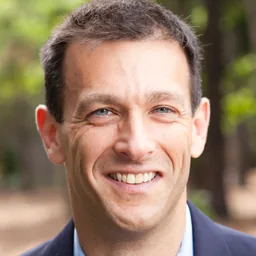
About the Guest
Barak D. Richman is the Alexander Hamilton Professor of Business Law and Co-Director of the Health Law and Policy Program at the George Washington University Law School. He is also a Senior Scholar at the Clinical Excellence Research Center at the Stanford University School of Medicine. Before joining GW Law, he spent twenty years on the faculty of Duke Law School and Duke’s Fuqua School of Business.
His research covers the economics of contracting, new institutional economics, antitrust, and health care policy. His work on the diamond industry led to his book Stateless Commerce (Harvard University Press, 2017). In 2025 he served as Special Counsel for Competition Policy in the Office of General Counsel at the U.S. Department of Health and Human Services. Earlier, he handled international trade legislation on the staff of the Senate Finance Committee under Senator Daniel Patrick Moynihan and clerked for Judge Bruce M. Selya of the U.S. Court of Appeals for the First Circuit. He holds an A.B. from Brown University, a J.D. from Harvard Law School, and a Ph.D. from the University of California, Berkeley.
In This Episode
Today’s episode is about what the diamond trade teaches lawyers about the limits of contract enforcement, why employers buy health care so poorly, and how his years on Senate Finance Committee staff sent Barak Richman into academia.
Richman’s first job out of college was on Capitol Hill, working for Senator Daniel Patrick Moynihan during the Clinton administration’s health reform effort. Of everyone who came before the committee, the people he found himself most drawn to were the academics who testified about their research. He still remembers Stanford’s Alain Enthoven describing, from a systemic perspective, what Congress could do to make health care more affordable and of higher quality.
We turn to his early scholarship on New York’s diamond merchants, which grew out of his doctoral work at Berkeley under Oliver Williamson. Diamonds change hands on credit, and they are “universally valuable and virtually untraceable.” A contract and a default judgment do little against a buyer who disappears with the stones. Richman explains why the industry relies on families and reputation instead, and what that tells lawyers: “contracts sometimes are just worth the paper that they’re written on and no more.”
The diamond conversation ends on the other side of reputation. A rule that no one will do business with a cheater is a group boycott, and group boycotts have been used to retain monopoly rents and punish mavericks. As Richman puts it, the practice “is on the edge of what could be pro-competitive versus anti-competitive.”
We end this edition on employer health plans. Most working Americans get health insurance through an employer, and Richman explains why a company that buys steel carefully can do a much worse job buying hospital care, in part because the people buying it usually come from HR, not finance. ERISA makes those employers fiduciaries spending their employees’ money, and he sees a chance that, over the next five years or so, enforcing that law “really could be transformational.”
The full conversation goes on to how federal courts have treated lawsuits over employers’ ERISA duties, where hospital market power shows up in a paycheck or a treatment decision, who has the power to change hospital spending, what he saw of the government’s competition tools from inside HHS, and his advice for law students who want careers in academia or government. That part is for subscribers.
Watch the Episode
Timestamps
- 0:00 Welcome to Cited Authorities
- 0:45 Senate Finance staff during the Clinton health reform effort
- 1:13 Working for Senator Daniel Patrick Moynihan
- 2:31 Alain Enthoven and the academics who testified
- 4:29 New York’s diamond merchants
- 5:11 Berkeley, Oliver Williamson, and relational contracting
- 5:47 How a diamond moves on credit
- 7:03 The limits of formal legal enforcement
- 7:51 What lawyers can learn from the diamond industry
- 8:59 Reputation in the age of e-commerce
- 9:30 When reputation becomes a group boycott
- 10:28 Why employers are passive buyers of health care
- 12:37 Buying hospital care like a car company buys steel
- 14:02 What ERISA asks of employer health plans
Resources & Links
People Mentioned
- Alain C. Enthoven, Stanford Graduate School of Business, whose Senate testimony Richman still remembers
- Oliver E. Williamson, 2009 Nobel laureate in economic sciences, under whom Richman studied at Berkeley
- Senator Daniel Patrick Moynihan of New York, for whom Richman worked on the Senate Finance Committee staff
Books
- Stateless Commerce: The Diamond Network and the Persistence of Relational Exchange by Barak D. Richman (Harvard University Press, 2017)
Firms & Organizations
- United States Senate Committee on Finance, where Richman worked on the staff
- George Washington University Law School (Richman’s faculty page)
Transcript of this episode
Read the transcript
ALEXANDER POWELL: Welcome to Cited Authorities. I’m your host, Alexander Powell. Our guest today is Barak Richman, the Alexander Hamilton Professor of Business Law and co-director of George Washington University School of Law, their health law and policy program. His recent work brings a rigorous institutional lens to employer health plan accountability, hospital consolidation, private equity, and medical debt. He also recently served at HHS on competition policy. Barak, welcome to Cited Authorities.
BARAK RICHMAN: Thanks so much for having me. It’s great to be here.
ALEXANDER POWELL: Barak, you worked on the Senate Finance Committee staff during the Clinton administration’s health reform efforts. What did you see inside that effort that made health care look like a problem of law and economics?
BARAK RICHMAN: That was really my first job out of college. I was there on Capitol Hill for about three years. The senator, the first chair and then ranking member, the senator that I worked for was Daniel Patrick Moynihan of New York. And, you know, like all twenty-three-year-olds, my learning curve was really, really steep. I was interested in politics and policymaking, but didn’t know much more beyond that and didn’t have any real clear professional pathway. I think the simplest answer is, of all the people that I was exposed to, elected officials, policymakers, appointed officials, lobbyists, attorneys, the people that I just found myself most attracted to were the academics that were being brought before the committee to testify on their expertise in their research. I don’t know if I knew at the time I wanted to study something related to healthcare, but I did get a sense of what I wanted to do with my career, and that was ultimately to do my own research. So, you know, like any twenty-two, twenty-three, twenty-four-year-old, I was just kind of taking the world in like a sponge. And those years were very formative in the sense that I felt I knew ultimately the kind of job I wanted to have, even if I didn’t know what specifically I’d be going into.
ALEXANDER POWELL: You mentioned that the academics you saw during that experience at least nudged you towards academia yourself. Can you think of any professors that you saw, heard what they said, that was especially relevant for you during that time?
BARAK RICHMAN: Well, I still remember Alain Enthoven testifying. I didn’t know who he was. I imagine most of your listeners don’t know who he is, because he’s still alive, although he’s in his nineties. But he was one of the foremost thinkers, is in many ways still the most foremost thinker, on health policy. He was a professor at Stanford. I later got to know him and was able to contribute to a volume that he was a part of. What I knew at the time was that he was describing how policy could make healthcare more affordable and of higher quality. He was explaining things at both a very high level and a very accessible level. And you know, in Washington, I guess really like in most places, and certainly when you’re talking about the health sector, you tend to hear people talk about how their one particular service or their one particular product or industry is really important and is saving so many lives or saving so much money. And Professor Enthoven was being brought in to do something entirely different. He was describing from a systemic perspective what we really needed to do as a country, and what Congress, what the law and policymakers could do to achieve that. It was a vantage point that stuck with me. And you know, it’s funny, actually, now that I’m talking, but I don’t know if he knew that he had that impact on me when I was a twenty-something. But it has lasted with me, and I’ve continued to admire his research, and the cadre of scholars that he’s in are, I think, the group of people that I still kind of aspire to be like.
ALEXANDER POWELL: It’s such a skill to explain complex topics in an accessible way. Professor, a major part of your early scholarship studied New York’s diamond merchants, who extended substantial credit without conventional contracts, relying on family networks, private arbitration, and reputation. What did that community understand about enforcement that lawyers often miss?
BARAK RICHMAN: Yeah, that’s a great question. So just to connect it to what we were talking about before, in the nineteen nineties I decided, after three years on Capitol Hill, to pursue an academic career, which meant trying to get a PhD. And it wasn’t necessarily a PhD in a health-related topic. And I found myself studying economics at Berkeley under Oliver Williamson. Oliver Williamson won the Nobel Prize in, I think it was 2010 [the prize was awarded in 2009], in economics for pioneering the field of study called institutional economics. And it was under his guidance that I came across some interesting economic problems that are called relational contracting. And some early work on the diamond industry, which is in many ways the epitome of relational contracting, ultimately served to be the material for my dissertation.
So the basic story there is really kind of simple. Diamonds go through a number of different hands. It’s mined from the ground, it’s brought to New York often through De Beers. I’m sorry, gone through London, often through De Beers. As a wholesaler, it goes through a number of different intermediaries, and ultimately it’s sold to a jewelry manufacturer to be put in a piece of jewelry. This individual diamond goes through many hands, usually through credit sales. And you know, that’s what you would expect with any industry that’s trying to maximize volume with certain liquidity constraints. You want to pay for something only after you have secured its resale. But with diamonds, because they’re universally valuable and virtually untraceable, the credit sale is like the following. I give you the diamond today and you promise to pay me in 90 days.
And there’s no way that I can enforce that through any kind of formal legal mechanism. You and I might have a contract. By not paying me, you’ve clearly breached the contract. I can clearly sue you for a breach, but it’s a diamond. It’s really valuable. The value of it, and usually we’re talking about piles of diamonds, exceeds any kind of asset you might leave behind. So if you run off with a diamond, sure I could sue you, sure I could get a default judgment, maybe I could even get a lien on your apartment or something, but that doesn’t compensate me.
So the key insight is that there are significant limits to formal legal enforcement. And I actually think that lawyers intuitively do know this, even if they don’t explicitly recognize it at the outset. They recognize that having somebody sign a contract does not mean that the transaction is necessarily secure. They have to think about who the person is, they have to think about the person’s ability to breach, think about the cost of enforcement. And in the diamond industry, because the formal legal system is so ineffective, they use informal legal mechanisms like families and reputations. And basically the simple idea is that if you ever break a promise to me, no one will ever do business with you again. And that is a very costly punishment. So what can lawyers learn from the diamond industry? Certainly that contracts sometimes are just worth the paper that they’re written on and no more. And that formal legal enforcement, enforcing contracts, it always intersects with other enforcement mechanisms. Other less formal mechanisms, reputation always plays a role. And people who sign contracts or enter into contracts usually know that. They know that what they are trying to do in order to secure some kind of commitment often requires some kind of creative deal-making and some alternative mechanisms that lie beyond the courts.
ALEXANDER POWELL: Right. Destruction of reputation in some ways could be a much more effective mechanism than a lien or uncollectible judgment ever could.
BARAK RICHMAN: In the diamond industry, for sure, because an uncollectible judgment is almost nothing and the reputation is almost everything. I would think that there are certain industries where reputational value means a little bit less. But reputation really is something that is inextricably part of the commercial world. Maybe less now in the world of e-commerce and the world of globalization than before, but it still is quite significant. And what’s fascinating about the diamond industry, and I think that other industries are doing also, is that with the introduction of anonymity and globalization, there are other efforts. You could call it Wirecutter, you could call it, you know, Yelp ratings or something, but there are other mechanisms, often sponsored by the industries, to make sure that reputation really means something. Often that requires an effort that requires constructing a new institution. But it still has a lot of value.
ALEXANDER POWELL: Right. I can think of anti-competitive means and motives that people might have to abuse that process as well.
BARAK RICHMAN: So for sure. At its core, a reputation mechanism, you know, is meaningful if, let’s say, you cheat me, and it means that it’s not just that I won’t do business with you, but everybody else won’t do business with you. And that effectively is a boycott, it’s a group boycott. And in certain instances in the diamond industry, I think that group boycott, that mobilization, is clearly pro-competitive. But it also can have some anti-competitive consequences. It is the mobilization of a whole industry against an individual. And group boycotts like that have often been abused, have been used to secure and retain monopoly rents, to punish mavericks, people are trying to bring new technologies into an industry, people are trying to lower prices. So it certainly is on the edge of what could be pro-competitive versus anti-competitive.
ALEXANDER POWELL: Nearly one hundred sixty-five million Americans receive health insurance from employers. Your survey suggests many plan administrators do not solicit competing offers or compare prices as carefully as ERISA’s fiduciary duties may require. Why have employers been such passive buyers of health care?
BARAK RICHMAN: Well, that is the, though I was gonna say one trillion dollar question, but it’s more, I think, closer to the nine hundred and eighty billion dollar question. So it’s a really important question. And for a little context, we spend way too much in this country on healthcare. And we’re not getting healthier. There are all sorts of inefficiencies. But one of the biggest inefficiencies is that we’re simply not paying for what we should be paying for. We’re paying for too much hospital care, not enough primary care. We’re paying higher prices than normally would be if we were really shopping around. So why is it that the health sector is so replete with these inefficiencies? Well, one explanation is the way we pay for health care. And I don’t mean by talking about Medicare and Medicaid, although those certainly have their own inefficiencies. I’m talking about the private market. Most Americans, and certainly most all working Americans, get their health insurance, get their health care through their health insurance, and they get their health insurance through their employer. And really it is employers, especially large employers, that purchase most of the health care in this country.
So these are important institutions of capitalism. You know, they’re run by some of the most business savvy people in the world. Why is it that they’re spending health care so irresponsibly in such inefficient ways? Now one answer is because of the way the healthcare is structured. You can’t pay for something that’s not being offered, and that’s one part of the problem. But I think an important and highly unappreciated problem is the people who are purchasing healthcare are simply not demanding the right stuff. As an example, you have a car company. The car company, they need technology, they need steel, and they have really sophisticated purchasers of steel. They make sure that they get the best steel at the lowest price within a competitive market. But that same company also purchases hospital care. And they do a much worse job purchasing hospital care than steel. And often they’re paying even more for hospital care than they are for steel. So what a lot of my research has been doing recently is trying to understand exactly your question. Why is it that, you know, the private market, private commercial insurance market spends almost a trillion dollars a year on health care? Why are they doing it so inefficiently?
And I think there’s some reasons. You know, most people who purchase healthcare in these large corporations do not come from the finance department, people who are always constantly weighing prices. They come from HR. And the HR people are primarily tasked with keeping people happy, not forcing them with trade-offs. Also, I think if you really think about a car company, for example, their expertise is in cars. That’s why they are global leaders. Their expertise is not in purchasing health care. That might be part of the explanation. But regardless of the explanation, and it really is an important question to ask, regardless of why they’re so bad, we do have a law that requires them to be better: ERISA.
The Employee Retirement Income Security Act is passed fifty years ago. It applies to all employee benefits. The two big employee benefits are usually retirement benefits and health care benefits. And the law says: look, if you are an employer and you are promising your employees to give them certain benefits, retiree benefits, health benefits, those are promises you have to take seriously. And really, the economic insight is the employers do not do this to be generous. This is part of negotiated compensation. An employer keeps some employee-earned dollars and spends those dollars, again, the employees’ dollars, on retirement and health benefits. And as such, they’re spending somebody else’s money, and as such, they have a fiduciary obligation to do it wisely.
So, your question is the important question. We’re trying to figure it out. Why do they do it badly? But I’ve increasingly observed that there is a law that really is not being enforced. The law requires these employers to do a better job than they have been. And we have started to see some lawsuits, some discussion about the enforcement of regulations. And it is possible that the next five years or so we’ll take very, very seriously the possibility of requiring and otherwise punishing employers who do not do a good job of spending their employees’ health care dollars. And it really could be transformational.
Next on Cited Authorities
Coming soon