Dr. Bryant Lin on His New Book Sunshine and From Diagnosis to Dialogue
A patient from Taiwan with a severe drug reaction asked Dr. Bryant Lin to help spread the word. He co-founded the Stanford Center for Asian Health Research and Education (CARE) in 2018 and later taught a Stanford course on his own stage 4 lung cancer.
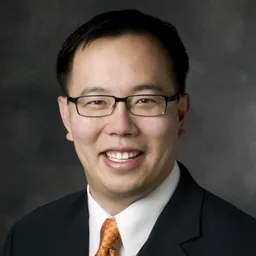
About the Guest
Dr. Bryant Lin is a Clinical Professor of Medicine (Primary Care and Population Health) at the Stanford University School of Medicine. He earned undergraduate and master’s degrees in electrical engineering and computer science at MIT, and his MD and internal medicine training at Tufts. He came to Stanford in 2005 as a research fellow in cardiac electrophysiology and a Biodesign fellow.
In 2018 he co-founded the Stanford Center for Asian Health Research and Education (CARE) with Dr. Latha Palaniappan, and he co-directs it. Since 2021 he has directed Medical Humanities and Arts at Stanford.
In 2024 Dr. Lin, who has never smoked, was diagnosed with stage 4 lung cancer. That fall he taught the Stanford course From Diagnosis to Dialogue. His book, Sunshine: An Exploration of Living When You Are Dying, was published by Crown on November 10, 2026.
In This Episode
A patient from Taiwan with a severe drug reaction asked Dr. Bryant Lin to help spread the word. He co-founded the Stanford Center for Asian Health Research and Education (CARE) in 2018 and later taught a Stanford course on his own stage 4 lung cancer.
Dr. Lin came to medicine from engineering and worked briefly in management consulting before medical school. He arrived at Stanford in 2005 for the Biodesign program, which teaches people to find unmet needs, define them, and come up with solutions. He says what sets it apart is that it is “focused on the human-centered need.” With all of the tools medicine now has, including AI, “it’s still really about the human.”
At Stanford he started a home visit program that took residents and students to patients’ homes. He had made home visits as a student at Tufts in Boston’s North End, with a neighborhood doctor who “would drive the wrong way down a one way street.” Most people, he says, are never seen at home by their doctor. He also started a diagnostic clinic, which he and his colleagues jokingly called the Doctor House Clinic. Some patients came with a foot of paperwork. “Some people have seen hundreds of doctors before they came to see me.” He estimates the clinic helped one patient in four, and that almost everyone “just appreciated being heard.”
Eight years ago a patient with recurrent gout took allopurinol, the preventive drug Dr. Lin had prescribed, and had a severe skin reaction that put him in the hospital on high dose steroids. The patient, who has given permission to share his story, was from Taiwan. He did not blame Dr. Lin. He said the reaction occurs in people of Chinese descent, that doctors in America don’t know about it, and asked, “Hey, can you help me spread the word so there’s more awareness about this?” Dr. Lin called Dr. Latha Palaniappan, whose research is Asian health, epidemiology, and pharmacogenomics. They got approval to start a center at Stanford with no funding, which he calls “a rare thing.” CARE now has a budget, grants it gives out, and a YouTube channel with half a million subscribers.
During COVID, three weeks after the lockdown in the Bay Area, he reached out to the non-faculty director of medical humanities, and they started a concert series, Stuck at Home. Thousands of people tuned in on Zoom at its peak. That work led to his directorship of the program, which to him is about “the intersection of the human experience and human connection with medicine.”
In 2024 he was diagnosed with stage 4 lung cancer. “I need to start a class about my lung cancer,” he says of that moment. He wanted “to share my experience from both the patient and physician perspective.” He taught it that fall, and at least half the lectures covered patient concerns such as nutrition, spiritual care, and mental health. A Stanford Daily story by Tom Quach, one of the students, led to a front page profile in the New York Times by Kate Selig, and hundreds of strangers wrote to him. He had not thought of writing a book, but with the class and his own experience he had “different things to say.” He had a lung cancer diagnosis, a center to co-lead, and the medical humanities directorship, and he says “it was serendipitous this all came together” in one person.
Asked what kind of doctor the class was meant to produce, Dr. Lin names two hopes. One is that students would better understand the patient experience “as told by somebody who’s both the physician and a patient.” The other is that some would go into cancer care. The lectures in Sunshine are “mostly what we call evergreen” and alternate with chapters of reflection. He is wary of giving advice outside medicine: “in medicine, we give advice based on evidence,” and life advice rests on “your end of one experience.” What he tells interns is “just leave yourself open to serendipity,” though the point of the story behind the word is that “it’s not all luck.” He hopes readers think about “meaning and purpose in life,” and that those reflections “will help people come together.” Kindness comes up too: “I think kindness is another one.”
We end this edition on why he has not quit to travel the world. He considered a summer road trip to ask people what they would do with six months or a year left. When he was diagnosed, a colleague said he would quit and travel. He has not: “I’m lucky I’m doing what I love to do, which is to teach.” He closed his practice when his cancer progressed. He still sees patients with the residents, co-directs CARE, directs medical humanities, and does lung cancer advocacy. “I’m not a bucket list believer.”
The full conversation continues with the title Sunshine, the prior authorization denials he faced when his cancer progressed, and what he would change. That part is for subscribers.
Watch the Episode
Timestamps
- 0:00 Welcome to Cited Authorities
- 0:56 From engineering to Stanford Biodesign
- 3:19 Taking residents and students on home visits
- 4:10 A diagnostic clinic for medical mysteries
- 5:17 A patient’s drug reaction and the start of CARE
- 8:36 The Stuck at Home concerts and medical humanities
- 10:33 A diagnosis, and a class about his own lung cancer
- 13:05 The New York Times profile and the decision to write Sunshine
- 15:07 What kind of doctor the class hoped to create
- 16:40 What a young doctor should take from Sunshine
- 18:32 Serendipity, meaning, and purpose
- 20:15 Kindness
- 20:43 Why he has not quit to travel the world
Resources & Links
People Mentioned
- Dr. Latha Palaniappan, co-founder and co-director of Stanford CARE
- Tom Quach, Stanford Daily
- Kate Selig, The New York Times
Books
- Dr. Bryant Lin, Sunshine: An Exploration of Living When You Are Dying (Crown, 2026)
Organizations & Courses
Transcript of this episode
Read the transcript
ALEXANDER POWELL: Welcome to Cited Authorities. I’m your host, Alexander Powell. My guest today is Dr. Bryant Lin. He is a Stanford physician, an MIT trained engineer, a teacher, and the founder of Stanford’s Center for Asian Health Research and Education. His forthcoming book, Sunshine, brings together
DR. BRYANT LIN: Yeah.
ALEXANDER POWELL: His work as a doctor and his experience as a patient. Today we will talk about the career, the book, and what medicine looks like from both sides of the exam room. Dr. Lin, thank you for being here. I would like to start with the work that existed before Sunshine and before the diagnosis, because you were already thinking very deeply about patients and stories and What medicine can miss?
DR. BRYANT LIN: Well, Alex, thanks for having me on your podcast. It’s really an honor and a pleasure to be here. I I’ve had a unusual career. As you mentioned, I came from engineering, actually worked briefly in management consulting before going into medical school and training in internal medicine. And I came to Stanford for the biodesign program, which was, I think, in the fourth year at the time. This was in ’05. And Biodesign Program at Stanford was a very innovative, is an innovative training program for medical device development, medical technology development. So helping teach people how to determine to find unmet needs, define those unmet needs, and come up with solutions for them. So this was novel. you think, okay, this is this is not novel. This is just the kind of scientific process or the engineering process. I think the biggest difference is that it’s really focused on the human-centered need, as opposed to a scientific question or an engineering need. Really, what we focus on is, you know, in design thinking broadly, and this was in early days of design thinking, really focusing on the human experience. So I think that. really open my eyes to figuring out in medicine and engineering, and of course, you know, in in the US and in the world, things have to be businesses really for the most part to to distribute and to get funding for ideas and and treatments. to figure out, you know, what’s what’s the problem you’re trying to address? Who are the stakeholders? And it’s all about the humans. And, you know, with all of this technology we have, right, all these capabilities, All of these tools, including, the latest and greatest AI tools, it’s still really about the human. It’s about solving the need for people, not as patients, but as human beings. And I think that’s where I came from in the you know, just starting at Stanford. I stayed on his faculty. you know, but I didn’t know, you know, it’s easy to think looking back to say, okay, this is what I did. But you know, look When at the time there wasn’t any organization or plan. I I, was working with startups, working on medical devices, doing clinical trials, teaching. but you know, I did a few things that were unusual. So one is I started a home visit program at Stanford. So we took patient took residents and students on home visits. And I had remembered doing that as a student at Tufts, going to the North End and you know, basically it’s the little Italy of Boston and Going with this crazy driver doctor who would drive the wrong way down a one way street. But everybody knew him. He was the neighborhood doctor and he would take us on home visits, and it was such a valuable experience that I wanted to provide that. And again, that’s about the human, right? You know, most people are never seen at home by their doctor. and learning about them as a holistic, as a whole human being was very important. And to this day I get students and r former students and residents reaching out to me saying, hey, that was the one of the few experiences that stays w stayed with them, their experience of visiting their patient at home. I also started a diagnostic clinic at Stanford. There had been one decades ago, but I I started a diagnostic clinic. It was we jokingly called it the Dr. House Clinic. And, you know, again, you think about that as, well, that’s gonna be s for something about science and medicine And really, honestly, it’s still about the human, right? These these people have had a challenging time, right? Gone from doctor to doctor. Some people have seen hundreds of doctors before they came to see me. and they come in with a stack, like a huge stack, you know, foot, a foot of paperwork, right? And you know, we it and it’s difficult work. It’s it’s you know, frequently not rewarding in terms of coming up with a diagnosis. I was I estimated maybe we helped one out of four patients. but was really about the human. I think almost everybody who came to our clinic just appreciated being heard, just appreciated somebody taking a second look at what they were going through. So again, it came back to the human human experience. and then fast forward, you know, doing all these different things. eight years ago, I had a patient. So again, patient experience, human experience. I had a patient and I get he had recurrent gout and and he’s given me permission to share his story. he had recurrent gout, which is you know inflammation of the joint, usually one or two joints. and you know, we treated him and treated him, and he kept coming back, coming back. So there are two types of medication. There’s one that’s just given for acute flares, and then one called allopurinol that we give for prevention. So, excuse me. The I gave him this drug for prevention and it he had a severe skin reaction to this drug. He ended up in the hospital, had to be put on high dose steroids, very severe. Like he had to be hospitalized. So he didn’t blame me. He said, Hey, this is a this is this reaction occurs in people of Chinese descent. His he was from Taiwan. But in America, doctors don’t know about this because, you know, they don’t treat a lot of Chinese patients, and obviously it doesn’t happen to everybody, so you know, it may not happen, but He didn’t blame me, and he was very nice. He didn’t blame me and said, you’re a bad doctor. He said, Hey, can you help me spread the word so there’s more awareness about this? And so, really inspired by him, I said, Hey, there’s so many other things I knew about that affect Asian patients and Asian American patients differently. So, one of those is lung cancer. Lung cancer has a much higher incidence rate among especially Asian women, East Asian women. and For lung cancer and not in people who’ve never smoked in Asians tend to have a specific tumor mutation called EGFR. So 50% of Asian patients have this tumor mutation, whereas, for example, in non-Hispanic white groups, it’s less than 20%, depending on the study you look at. So, and then there are other diseases like stomach cancer that are more common, nasopharyngeal cancer. Asians tend to, both East Asians and South Asians tend to get diabetes at a lower weight. there’s also you know many other issues that disproportionately or differently impact Asians. So I reached out to my colleague, Dr. Latha Palaniappan, because I had no background in this. Like my my background, academic background at that point was in clinical trials and medical devices. so you know, I reached out to her because I knew she was an expert. That’s her research, Asian, Asian health, and especially specifically epidemiology and pharmacogenomics. So I reached out to her and she’s like, this is a great idea. Let’s let’s build a center at Stanford. And so with no funding, we, you know, talked to all our colleagues at Stanford involved and that we thought were involved with Asian Health. And everybody was enthusiastic. And we got approval to start a center, even though we had no funding. So that’s a rare thing. Usually you start a center because you’ve got some funding or a grant or donation, and because of the support of the Asian American community in the Bay Area. We’ve been able to grow that center over the last eight years. now we have, you know, a great budget. We give out grants. We have educational channels. So our YouTube channel has gives we have regular talks by our faculty. We have half a million subscribers on YouTube. we hold summits, we hold symposia, conferences, you know, many, many things we do to support the community. In parallel, of course, that was right before COVID. And then during COVID, of course, everything shut down. so I thought separately from CARE, this is our Asian health centers, we call it CARE, Center for Asian Health Research and Education. three weeks after kind of the lockdown in the Bay Area, I reached out to a friend of mine who we’d worked with who ran was the non faculty director of medical humanities. At Stanford. And I said, Hey, we got to do something about this because everybody’s gonna be shut in at home and people are gonna go crazy. So we started the Stuck at Home concert series. And I just did that because I thought, hey, this is a need, this is something again, a human-centered need, very human, right? We’re all gonna go extra crazy at home. And we called it stuck at home. And it was very successful and popular. And you know, at the peak, I think we had thousands of people tuning in on Zoom. We were so successful we we even got Zoom bombed at some point. By some people who had heard about it. but that experience actually led me, and they encouraged me. Dr. Audrey Shafer and Jackie Genovese. Dr. Audrey Shafer is the faculty founder of the program. She was retiring. So five years ago, she encouraged me to apply for the directorship of the program Medical Humanities. And most people don’t know what medical humanities is. So it’s really in the intersection of and it’s defined differently every place. Some people talk about it as narrative medicine, telling stories about from the patient and provider perspective, the clinician perspective. to me, it’s really about the intersection of the human experience and human connection with medicine. And so that to me includes almost everybody, right? Because at some point we’re all patients or caregivers or clinicians ourselves, right? So that again looking back, it seems so easy, right? Seems like, that makes sense. you you’re doing things at the center of humanism human human experience and technology and Asian health, because that’s my community I come from. but then 2024, I got diagnosed myself with stage four lung cancer. everything kind of coalesced, right? very shortly after I was diagnosed. And again, sorry for this long-winded answer, but I figured I can expand this out. because I taught many classes, I knew how to start classes, and Stanford’s one of the few places where medical school faculty can start classes for the whole university. I I know of I actually don’t know of any other place that allowed that allows this and encourages this. So I’d started classes before, including storytelling and medicine with some colleagues and other things. And I was like, hey, I need to start a class about my lung cancer. this is a unique experience, just like the home visits, to share my experience from both the patient and physician perspective. So I started that class fall of 2024. Had three students who I’d worked with before, they enthusiastically supported, and it was just a amazing experience. it’s on YouTube, so if you want to watch it, just Google Bryant Lung Cancer YouTube class and then You don’t have to say YouTube class and it’ll pop up. It’s offered by our continuing medical education office. and yeah, it’s just amazing. People reached out to me saying, Hey, I saw your class, I learned so much, it really helped me, even though maybe they had some other type of cancer. we talked about things like diagnosis and screening, difficult conversations, being mortal, access to care, care for giving, spiritual care, epidemiology. nutrition, cancer stories, and mental health, treatment, and of course the future of cancer care. So, you know, lots of really great things, but we we veered from the standard medical school course in that we I really wanted to rebalance it based on the patient perspective. I really wanted to balance it based on, you know, 95, 99% of the time patients not in the clinic, right? As doctors, you know, we that’s our view, right? patients we see the patient when they’re in the clinic and that’s the way they we see them because that’s just life, right? That’s when we see them and that’s our experience with them. But from the patient side, of course, we’re we spend so little time with the doctor, nurses, in the infusion center getting tests. We’re outliving our lives. So that’s why, at least half the lectures were about really patient centered concerns like nutrition and spiritual care and mental health. rather than a focus on, you know, pathophysiology. had cancer biology and things like that. So so that course got a lot of attention. There was a front page New York Times profile about the course because again, funny thing. Another theme from the book is serendipity. a Stanford Daily covered our story or class. Tom Quach, one of our students, he was gonna be a med student this year. he, you know, wrote a great story the former editor of The Daily saw it. She was at the New York Times and said, Hey, this is a great story. Let’s she pitched it and, wrote the profile about me, Kate Selig. And you know, kind of random, right? Like how that’s how it ended up in the New York Times. And because of that, people reached out, strangers, you know, hundreds, I don’t know, I can’t even count, maybe it could be a thousand at this point, you know, emailed me and said, Hey, your story resonated with me. one of my former colleagues, Paul Kalanithi, who I who I never met, he passed away, I think about 10 years ago. He wrote an amazing book called When Breath Becomes Air. Very popular. I think it popped up recently again on the New York Times bestseller list, you know, years later. I was bestseller then and is was a bestseller recently. I know his his his wid his widow, Dr. Lucy Kalanithi. And it was just an amazing book. So I always never thought, hey, why would I write a book about this? But I figured with the class, with my experience, I had different things to say in a different way and different aspects to share about my journey with with lung cancer. So inspired to write the class, write the book. I wrote it and you know, it was kind of funny, right? Makes sense now, right? I’m I’ve got lung cancer. I had the center to co-head the center. so I’ve got some experience, knowledge, so-called expertise. And then I’m the director of medical humanities. So medical humanities all is all about narratives and storytelling and medicine, right? So it seems like a natural thing to happen, but I mean really it was serendipitous this all came together in one person. you know,
ALEXANDER POWELL: As you mentioned, you created the course From Diagnosis to Dialogue at Stanford. What kind of doctor did you hope that the class would help create? You mentioned that there is a student from that class who’s, I think you said entering medical school right now. What kind of doctor do you want them to be?
DR. BRYANT LIN: Yeah, a it’s a great question. we had a couple of goals for the class. So one goal, so the class was I think more than half med students, and then the rest were undergrads and graduate students from other schools. The I my I have a couple of things. One was a hope that they would have a better understanding of the patient experience, as told by somebody who’s both the physician and a patient. And the second thing is I hoped Some of the students would go into something involving cancer care. So is that primary care? I’m a primary care doctor. I practice primary care. Got lots of patients who are who have cancer, who’ve been diagnosed with cancer, either, whatever you call them, survivors under active treatment. we’ve got different labels for different people now. or, you know, research it could be research, could be they become oncologists or surgeons, or, you know, it didn’t really matter to me what specialty, just, you know, to encourage people to go into some aspect of cancer care, I think. me was was my hope. And yeah, so I I think that’s still my hope. I think number one that just sharing that experience hopefully will help them be have a different perspective on being a doctor. But you know, encouraging students to go into some aspect of cancer care or research was was important.
ALEXANDER POWELL: And if a young doctor in residency For example, reads Sunshine, what do you hope stays with them?
DR. BRYANT LIN: Yeah, I think of course there are the lectures and the other chapters are really reflections, right? So to me, I think, you know, the the lectures are mostly what we call evergreen, right? You know, when we teach classes, we think about what components are, you know, not gonna change much versus what components need to be updated. You know, of course, there are things like you know, the future of cancer care. That’s changing all the time, cancer treatment, that’s changing all the time. and you know, diagnosis may be changing all the time, but the human-centered chapters are not. And those include a lot of the lectures, but also my reflections on life. and and I think, you know, it’s funny, I people always students always ask me, frequently ask me, Do you give any advice? You know, career advice, life advice. And I always half joke with them. It’s like I hate giving advice, even though I’m a doctor, it’s my job, right? To give advice. So doctors do, we give advice, you know. Attorneys give advice, right? these are, these are advice-giving professions, But in medicine, we give advice based on evidence, right? We typically, I mean, evidence or experience, you know, with with career advice, life advice is solely based on experience, right? So solely based on your end of one experience. And that may or may not, you know, maybe you’re drawing the funny lessons from that. How generalizable are they? So I, you know, I always preface and I say. this is I don’t like to give advice outside of medicine, but you know, I can share with you my experience. So I think in these other chapters, these alternate chapters, I share my experience. So, you know, reflections and thinking about happiness and sadness and serendipity and you know, which we’ve talked about. And, you know, I actually gave a talk to some interns at at a friend’s company recently and they asked me again for advice and I say, just leave yourself open to serendipity, leave yourself open to, you know, opportunities. But you also part of serendipity, there’s a kind of a story in the book about the origin of serendipity, and it’s not a Greek or or a Latin word, actually. It comes from a story about somebody named I think they’re named Serendip, and about how all these random things happened to him and But the key is not just the random things happen. He has to recognize it and take advantage of it or utilize it. So, you still need to have that part. So it’s not all luck. But I think the most, you know, one one thing that students, I hope, take away from the book, and patients and caregivers and whoever reads it is, you know, meaning and purpose, just thinking about meaning and purpose in life. And that I think is I think we all struggle with that. Right. We think about why are we here? What are we doing here? Well, why am I, why am I an attorney? Why am I doctor? Why am I a parent, or why am I not a parent? Right. I I do think, you know, again, that’s it’s my perspective, but I think that’s a worthwhile constant conversation about meaning and purpose in life. especially in this day where we’re we’re just so divided seemingly in the country and the world, to me, I hope reflections on meaning and purpose will help people come together. Cause I think we’re humans, where there are a lot of commonalities and our struggle to be on this planet, right? What do we do with ourselves? Because we’re common no matter what culture, no matter what country, no matter what political spectrum you come from. So that I think is is a is a big deal for me. there’s so many other things. I I think kindness is another one. That’s something where, when I was growing up, we always talked about kindness and with my kids, but you know, we don’t talk about that. That’s not in the conversation now, you know, talking about kindness. And it’s it’s interesting. I I don’t know why. but I hope that’s something. So I I think there’s something for everybody in the book. there’s many factors. You know, for me personally, you know, people when you get my temptation, you t tell me if this is a good idea. I was tempted for this summer. I was like, geez, I don’t have any plan for this summer other than just doing my regular work. I was like, maybe I should take a road trip and ask people, what are you gonna do if what would you do if you have six months left or what year left? Right. And some people have thought about it and some people haven’t. but people are very sometimes surprised. I remember when I was diagnosed, my colleague said, Hey, I would just quit if I were you, I just quit and travel the world and do all sorts of stuff. And it’s interesting. I haven’t done that. I haven’t chosen to do that because I part of this is I’m lucky I’m doing what I love to do, which is to teach. I did have to close my practice last fall when I had progression in my cancer, but I still see patients with with the residents. So I do some clinical teaching. I still direct co-direct the center for Asian health, research and education, and I’m still the director of medical humanities, still do research. and then of course now lung cancer ad advoc lung cancer advocacy takes up a lot of my time. But you know, I still find time for these other things like satisfying my curiosity, right? You know, so you know, be trying to be creative. these are all things in the book, about you know, why do this when you know there’s a lot of people would say, geez, you just go and have fun and and you know. what’s your bucket list? I’m not a I’m not a bucket list believer. I’m I’m more of a again, going back to meaning, doing many different things that have meaning and not necessarily a a a limited bucket list.
Next on Cited Authorities
Coming soon