Running a City Law Department | Ebony M. Thompson, Baltimore City Solicitor
The Baltimore City Solicitor on a non-linear path from Brown economics and the Marine Corps to wealth management, real estate, law school in her thirties, and the chief legal seat at City Hall.
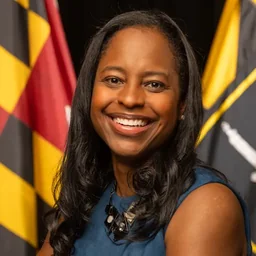
This complete episode remains publicly available. Cited Authorities keeps interviews with serving government officials public in full.
About the Guest
Ebony M. Thompson is the Baltimore City Solicitor, the chief legal officer of Baltimore. She is the first woman and the first openly gay person to hold the role in the city’s nearly 300‑year history. The City Council unanimously confirmed her in January 2024.
Thompson came to City Hall through Venable LLP, where she spent eight years as a commercial litigator. She was part of the Venable team that won Maryland Public Service Commission approval for the Exelon-Pepco merger, and her practice also covered real estate, bankruptcy, and labor and employment matters. She was recruited as Deputy City Solicitor by James L. Shea, Venable’s longtime chairman, who came out of retirement to serve as City Solicitor under Mayor Brandon Scott. Before law school, Thompson studied economics at Brown University, served in the Marine Corps Reserve, finished first in her Officer Candidate School class, and built a wealth management career at UBS and a successful real estate career. She earned her J.D. magna cum laude from the University of Baltimore School of Law in 2013, where she served on Law Review and won the moot court competition.
Thompson holds a certificate from the Blockchain Technologies: Business Innovation and Application program at MIT Sloan and led Baltimore’s effort to record vacant property deeds on a blockchain through a partnership with Medici Land Governance. She volunteers pro bono with Free State Justice. She lives in Baltimore with her three daughters.
In This Episode
- Law Links and the high school internship at the same City Law Department she now leads
- Brown economics, Marine Corps Reserve training, and finishing first in her Officer Candidate School class
- UBS in Midtown Manhattan on September 11, 2001, and the decision to walk away from finance
- Harvard graduation advice
- Starting law school in her thirties at the University of Baltimore
- Eight years at Venable LLP — commercial litigation, plus the regulatory team on the Exelon-Pepco merger
- Jim Shea’s call from City Hall after more than two decades leading Venable
- Deputy Solicitor, interim chief of staff, and the squeegee initiative
- The city charter’s ten-year bar rule, a year as Acting Solicitor, and unanimous confirmation in January 2024
- MIT Sloan, Medici Land Governance, and Baltimore’s blockchain deed-recording project
- Eight years of IVF advocacy and the Free State Justice pro bono work that followed
- Advice for people whose path does not look linear
Key quotes on a non-linear path to public service leadership
That's when I learned that just because you are good at something, that doesn't mean that's what you were intended to do. That's not your purpose. I was good at something and it was safe, beyond safe, and a lot of people questioned why I would leave when I was at such a prominent firm with such high potential. It just wasn't my purpose. But it was part of it.
Ebony M. Thompson
Learning to follow helped me be a better leader. That first year I was enlisted, I was following, and it helped me become a better officer in terms of the training and what it took to lead. Those are skills I rely on every single day.
Ebony M. Thompson
Caring about the team first. Caring about your team, ensuring they understand the mission, understanding the strengths and weaknesses of your team, and being able to support them and give them the resources they need so they can succeed and complete that mission.
Ebony M. Thompson
Timestamps
- 0:00 Cold open
- 0:38 Law Links and the Baltimore City Law Department
- 2:00 Brown, the Marine Corps, and Officer Candidate School
- 4:00 Wealth management at UBS before September 11
- 7:30 September 11 and walking away from finance
- 9:30 Real estate, Harvard graduation advice, and the LSAT
- 10:50 Law school in her thirties at the University of Baltimore
- 12:30 Eight years at Venable
- 14:00 Jim Shea’s call from City Hall
- 17:20 Deputy Solicitor, interim chief of staff, and the squeegee initiative
- 20:00 Acting Solicitor, the city charter, and unanimous confirmation
- 22:00 MIT Sloan, blockchain, and vacant-property deeds
- 24:00 What blockchain can do beyond crypto
- 28:00 IVF coverage, three daughters, and pro bono advocacy
- 32:00 Advice for people whose path does not look linear
Resources & Links
- Ebony M. Thompson, Baltimore City Solicitor
- Baltimore City Department of Law
Schools & Organizations Mentioned
- University of Baltimore School of Law
- MIT Sloan Executive Education: Blockchain Technologies
- Medici Land Governance
- Free State Justice
People Mentioned
- Mayor Brandon M. Scott, Mayor of Baltimore
- James L. Shea, Counsel, Royston, Mueller, McLean & Reid; Former Chairman, Venable LLP; Former Baltimore City Solicitor
- Ronald Weich, Dean and Professor of Law, Seton Hall Law School; Former Dean, University of Baltimore School of Law
Full Transcript
Read the full transcript of this episode
EBONY M. THOMPSON: It’s great to be in a position to affect change and to have the support of a mayor and an administration that is going to back that. It’s been amazing.
ALEX POWELL: You interned in the Baltimore City Law Department as a high school student through a program called Law Links, which places Baltimore Public School high school students in law firms and legal offices every summer. Today you’re the City Solicitor, Baltimore City’s chief legal counsel, the first woman and first openly gay person to hold that role in the city’s nearly 300-year history. You’re running the same department where you interned as a teenager. What do you recall from those days in the Law Links program?
EBONY M. THOMPSON: Well, first, Alex, thank you so much for having me on here. It’s a pleasure. Anything for a fellow UB Law alum. It’s been a full circle moment. I knew I was interested in law, and there was a program I went to in Baltimore, it was the second year of the Law Links program, where they wanted to go into public schools and expose students to what it was actually like to be a lawyer, hoping to get more public school students interested in the field. It’s eye-opening that I was the lowest-ranking person at one point when I interned, and now lead that very office. It speaks to the testament of the city and to programs intentional about helping public school students, African Americans, and women get into this field, and how impactful that intentionality is. I’d love to be the spokesperson for that and for why it’s so important.
ALEX POWELL: You studied economics at Brown, and while you were there you joined the Marine Corps Reserve and went on to graduate first in your class at Officer Candidate School. Tell me about that chapter of your life.
EBONY M. THOMPSON: I wanted to ensure that even though I was at an Ivy League school, I was still well-rounded. I had this calling for service, and I didn’t want to rest on the fact that I was going to be an econ major at an Ivy League school and not fulfill that. I felt like there was a stronger calling, and entering the service was amazing to me. The strategies I learned, I rely on them every single day. I first went to boot camp on the enlisted side, and the next year I went to Officer Candidate School. Learning to follow helped me be a better leader. That first year I was enlisted, I was following, and it helped me become a better officer in terms of the training and what it took to lead. Those are skills I rely on every single day.
ALEX POWELL: That’s so interesting, the transition from being a follower to learning how to lead. And of course, now you’re in an immense leadership position. Can you talk more about what the Marine Corps taught you about leadership?
EBONY M. THOMPSON: Caring about the team first. Caring about your team, ensuring they understand the mission, understanding the strengths and weaknesses of your team, and being able to support them and give them the resources they need so they can succeed and complete that mission. Seeing that all the way out, planning that and then being able to make adjustments. Everything is not going to go how you write it out or what you plan, even if you have it planned perfectly. There are going to be setbacks. There are going to be things you do not account for. Being able to make those adjustments and still complete the mission, I have to do that every day. Walking into City Hall, I think I know what my schedule is. I have a pretty good grasp of what my schedule is. That may not actually be what I do for the day. There are other things not on the schedule that may become more important based on what’s happening, and being able to navigate in a fast-paced environment that demands you to be at 100 all the time. It was good training.
ALEX POWELL: After Brown, you went to work at UBS in New York providing wealth management services for international clients, and that’s a very specific world. Before 9/11, what was that life like for you in your twenties?
EBONY M. THOMPSON: I was so happy to be at one of the largest investment banks in the world. That was a great opportunity. I was one of the only Black women, one of the only Black people, on my floor, it meant something to have Black representation there. I had been one of few in a lot of my classes, but it was different on that level. I was trying to soak up as much knowledge as I could. I learned a ton about international equities and fixed income and the things that help high-net-worth clients. But I realized it wasn’t actually what my calling was. That’s when I learned that just because you are good at something, that doesn’t mean that’s what you were intended to do. That’s not your purpose. I was good at something and it was safe, beyond safe, and a lot of people questioned why I would leave when I was at such a prominent firm with such high potential. It just wasn’t my purpose. But it was part of it.
ALEX POWELL: Of course, September 11 happened. You were working at UBS in Midtown. You’ve said that watching the attacks that morning, you realized that finance wasn’t your passion. What was that shift for you?
EBONY M. THOMPSON: It was very eye-opening for several reasons, but on the career level, unfortunately, a lot of the people in those towers were drinking morning coffee, having their meetings, and just gone. For me it resonated: am I doing something that, if something happened, this is really what I’m intended to do? It was about purpose. Heaven forbid, if I had been at the alternate location closer downtown, is this something that I would be willing to die for? Is this something I feel that passionate about? I knew the answer before that day was no. That was what told me it was time for a change, and I never went back. I called and I said, I can’t go back. That’s when I began in real estate, and then eventually law. Life is really, really too short, and it’s time to find the purpose.
ALEX POWELL: I’m sure you were not alone in that decision based on what happened that day.
EBONY M. THOMPSON: Absolutely not.
ALEX POWELL: You moved into real estate after that, and you’ve said you did well, but something was still missing. What was missing for you?
EBONY M. THOMPSON: Well, I had taken on a ton of loans. I’m at Brown, my parents paid some, but a lot was on me. When recruiters came to campus, it was, oh my goodness, this is the most money I’ve ever seen in my life, let me take this opportunity. But I knew law was what I was interested in. I pushed that away and told myself I would just pay down some of the debt and I’d get to it. I got into real estate and I really enjoyed it. But there was something saying you really love the law. I did well, but something was missing. So I went to law school in 2010, graduated in 2013. As soon as I went, first class, I knew. That’s what I was missing. By going into law I was able to combine all of my interests, econ, finance, real estate, into my passion. I was able to do that every single day.
ALEX POWELL: In your early thirties you enrolled at our alma mater, the University of Baltimore School of Law, and you graduated magna cum laude. You won the moot court competition and served on the Law Review board. As a fellow UBalt law grad, I know what that first year feels like. Coming in as a career changer with a Brown economics degree and a Series 7 on your résumé, what was that experience like?
EBONY M. THOMPSON: It was totally immersive. I knew this was not like anything I had done. It was sort of like a submission, I’m submitting myself to all those things I’ve done that are in a different area, but I need to learn law. I felt like I was behind because I’m coming out with students who knew from the beginning they wanted to be lawyers, who did it right. I was away from the structure of school and from how important studying is in that first year. So I just submitted myself, fully immersed myself. And that’s when I knew, because it wasn’t hard. It wasn’t a forced submission. It was, wow, this is amazing. This is what I’ve been missing. In everything I learned, I was thinking of different ways I could use it. It opened my mind up. When something is, you work hard, but it’s not hard for you to do, that’s when I knew I was in the right spot.
ALEX POWELL: A flow state. It’s such an important signal of, this is the place where I’m supposed to be. Ebony, you spent more than eight years at Venable. You were on the Exelon-Pepco merger team doing complex litigation, real estate litigation, regulatory approvals. You were on the partner track, and by your own account were happy. What was that work like day to day?
EBONY M. THOMPSON: Work life was amazing. Day to day, Venable allowed associates and counsel to go into different practice groups if your time allowed. It wasn’t sectioned off. So in commercial litigation I could take on real estate matters, regulatory matters with Exelon-Pepco, bankruptcy, labor and employment. I didn’t know that this was going to translate into such a big plus when I came over to the city and began running these different practice groups. Going out of my comfort zone, not just staying in commercial litigation, but doing products, doing real estate, exposed me to so many different areas of the law. So when the former chairman, Jim Shea, who is also a former solicitor, came over to the city and asked me to be his deputy, I was just like, I don’t know if I could do that. I don’t know anything about government. All I know is this world. I had been very happy. I had turned down many headhunters over the years. I would always say, I’m at the best firm in the best city, and I loved it because I got to work on some of the biggest cases with some of the most brilliant attorneys I’ve ever known, learning every day. I had no plans to leave at all.
ALEX POWELL: You anticipated my next question about Jim Shea. He was Venable’s chairman before he became City Solicitor, and he asked you to be his deputy. You said you were shocked. What was your first reaction, and how long did it take you to say yes?
EBONY M. THOMPSON: It was a very interesting time. He had just left Venable and we’d given him a retirement party, but it was during COVID, so we couldn’t really have the party, so we had sent him off. When he called me, I thought he was just saying goodbye. We had worked on a lot of Johns Hopkins cases together. I knew he was fond of me, but at that point he had over three decades of experience and literally knows every lawyer in this city. For him to ask me, out of all the people he could have asked, was flattering, but I was just like, are you sure you got this right, Jim? He was very sure of himself, and I had to sort of borrow his confidence because I was not that confident. He told me specifically, he’s a great negotiator, he’s a lawyer, do not answer me the day I called you. Just think about it. It made me think about every opportunity I had in my professional career originating from what I learned in Baltimore City public schools, Baltimore City nonprofits that invested in me, Baltimore City teachers, my community. How do I say no to a city that has literally given me the opportunity to go into three different industries and succeed in all of them? I said, I have three kids in private school, I financially can’t take, at that point it was over a 65 percent cut. I said, I don’t know if I can. Can you give me a year to prepare for it? He said, I’ll give you a year. And he did. I saved, and Venable was very supportive, they wished me well and let me go. It’s been life-changing.
ALEX POWELL: You also served as the interim chief of staff in the Mayor’s office while you were the Deputy Solicitor. You were overseeing legislative affairs, communications, constituent services, and still helping run the Law Department. That’s essentially two full-time jobs. What did that teach you about how city government works?
EBONY M. THOMPSON: It was a crazy time. Not sustainable, but I knew it was interim. I had been there about six months. I was still Deputy when the Mayor asked me to be interim chief of staff. I had no money, there was no free time anyway. I had to learn government, so why not take the same approach I did in law school: fully immerse myself. That was the one thing I was so insecure about. I was secure about the law, but very insecure about knowing how government worked. All I knew was private firms, I was very good at understanding how that worked. I knew the plan was for Jim to leave after his year, so I had basically a year before I was running this Law Department. Sink or swim. So I threw myself in. This was when we were dealing with the squeegee initiative, and I had to set out the legal strategy that touched on First Amendment rights and the balancing act with public safety. We had a lot of outcry from people in the city who wanted it just handled, but we needed to be strategic and protect the city legally while getting the same result. At the same time we were dealing with the legislative side, council side, and external side. It taught me a lot. It also helped me build really good working relationships internally and externally that help me as Solicitor now. It was tough, but rewarding. I’m glad I did it.
ALEX POWELL: When Jim Shea retired in January 2023, the Mayor named you his successor. Then it came out that you were about a year short of the charter’s ten-year bar requirement. You ended up serving as Acting Solicitor for a year, and they confirmed you unanimously the next January. Former UBalt Law Dean Ron Weich said at your confirmation that you remained acting only because the charter drafters couldn’t imagine a young lawyer as brilliant, capable, and ready to lead as you.
EBONY M. THOMPSON: I was so flattered that Dean Weich said that. My goal was just to help the city. You can put whatever title you want, my title changed three or four times in my first three years here. It doesn’t matter what the title is. It’s about helping the city. It’s about being in a place to lead the Law Department so that we can advance the interests of the city, take the target off our backs, and start being aggressive on our affirmative litigation. We’re really trying to advocate, especially this past year, in protecting the rule of law, striving to protect grants that were already appropriated, challenging executive orders we feel are illegal, challenging issues that affect Baltimoreans and people nationwide. It’s hard to do, but it’s great to be in a position to affect change and to have the support of a Mayor and an administration that backs that.
ALEX POWELL: You completed the Blockchain Technologies program at MIT Sloan in January 2022 while you were still at Venable. Your final project proposed using blockchain for real estate deeds. Most lawyers at major firms are not spending their evenings on MIT blockchain courses. What pulled you into that?
EBONY M. THOMPSON: It’s funny, my former practice group leader at Venable told us, when we had downtime, study this industry: blockchain, cryptocurrency, it’s going to be it. This was around 2015. He knew what he was talking about. I listened to him and I would just read, read, read. Then I really got interested. This could be a disruptive technology, it could provide some efficiencies. But I didn’t really know how to use it. I wanted ideas. I wanted to take a course where people were thinking about this full time, and learn from them. That’s what the MIT course did. It got me thinking again about one of my interests, real estate, and one of the areas the city has been dealing with for decades, vacant housing. Every time we would rehab a house, there was just another one. It didn’t matter how much money we had, there was always another one, another one. We had as high as 16,000 vacant properties. The Mayor declared vacant housing not just a housing issue but a public health issue. He said, bring all of those ideas together. So I was able to use some of the strategies I learned at MIT in a practical way. At the time I didn’t know the Mayor would look to the Law Department for any solution. This was just what I thought it could be. When I presented it, there were skeptics, but they let me pursue it, and people said, this kind of makes sense. That’s how we started. Now we have over 228,000 properties recorded on chain, which most importantly opens up tokenization or fractional ownership of vacant properties, making it more affordable for people to participate in the redevelopment of their own neighborhoods, ones that have sat through decades of disinvestment.
ALEX POWELL: For listeners who hear “blockchain” and understandably associate it with cryptocurrency, how do you explain what this actually is and how it works?
EBONY M. THOMPSON: Cryptocurrency is just a small fraction of what blockchain technology can do. In our use case, a vacant property usually transfers hands at least three times before it goes from vacant to active use. The majority of vacant properties are not owned by the city, they’re third-party owned. So we created a separate docket, the in rem docket, to take properties off the foreclosure docket, which usually takes two to three years, and put them on a fast track of four to six months. With that in rem docket, the city gets possession of the property. We don’t keep it; we sell it to an investor, who rehabs it and either sells it to an end user or rents it out. That’s three times the property changes hands in about six months to two years. So why are we doing a title search that goes back fifty years? It does not make sense. If we record the deed on a blockchain, it’s immutable, there are no changes, you can only add, you can’t delete. It’s decentralized, it’s not a central authority where someone can be compromised or compromise the data. These are the protections government says it wants: transparency and immutability. So why not use them? If we record it once, now we can just look forward instead of looking backward. When you’re trying to save time and get through 16,000 properties, now under 12,000, you don’t want to waste time on old searches. Now that it’s on chain, you also have the infrastructure to do fractional ownership, which is where the real power of the technology starts. It can be used in medicine, if you’re out of town and you’re allergic to something, if it’s on chain, providers will know not to give you that medicine. The quality and source of food. IDs, why does an ID for an event that requires 18-and-older need to show your address and everything else? It can just say, this ID is verified, you can go in. There are many use cases. The more you learn about it, especially in combination with AI, the more you see it can transform how governments are run.
ALEX POWELL: Just a couple more questions. You’ve mentioned that you had a preexisting medical condition that should have qualified you for IVF insurance coverage. The insurer denied it because you hadn’t tried to conceive naturally with a male partner. You have three daughters now, all through IVF. You’ve said the things that motivate you are seeing the real-life implications of the laws you want to be passed. How much of your legal philosophy comes from moments like that?
EBONY M. THOMPSON: That’s a great question, and thank you for bringing that up. It’s something I reflect on daily. When you see systems that can take a bad situation and make it worse, discovering that you have a fertility issue is already devastating, and then being told, if you were straight or married, we would take the financial burden, but because you have not gone the straight way, the financial burden is yours, those are the things that really motivate me. You have to make a choice: do I get stressed and fight, which my natural inclination as an attorney is to do? Or do I preserve what I have because I’m trying to do something bigger and bring children into this world, write the check, suck it up, and focus on what I need to get through what ended up being an eight-year process to bring my kids here. I had the financial means at Venable to do it. There are a lot of people who don’t, who would have to forego what I think are the three biggest blessings of my life, because they don’t adhere to someone’s standard. No one is asking for approval. I just want my rights. I just want what I paid for. We could have a public debate, should you have IVF? I couldn’t care less. But that’s what pushes me. After I had my kids, of course I was able to volunteer with Free State Justice and provide pro bono service on that level to really help people who couldn’t do that. Those things stay in the back of my mind.
ALEX POWELL: My girlfriend Julie and I have been dating for about two years. She started her egg-freezing treatment last night. So it’s very timely. It’s been a process, as I’m sure you can imagine.
EBONY M. THOMPSON: Science is amazing, and you will get through it. It is tough, but you’ll get through it.
ALEX POWELL: I appreciate that. I’ll let Julie know you said that.
EBONY M. THOMPSON: Absolutely.
ALEX POWELL: Ebony, as we finish up, you studied economics at Brown, you served in the Marines, you worked in wealth management at UBS, you built a real estate career, went to law school in your early thirties, spent eight years at Venable, and now you’re the Baltimore City Solicitor. For ambitious people who might worry that their path is too unconventional, what do you want them to hear?
EBONY M. THOMPSON: I want them to hear what my friend told me when I was at her graduation at Harvard for her Master’s of Fine Arts. I said to her, oh my God, I was 30 at the time, if I go to law school now, I’m going to be 33 when I graduate. She said to me, and I tell you, this was it; I went and took the LSAT right after, God willing, in three years you’re going to be 33 anyway. But if you go to law school, you’ll have your law degree. The time is going to pass. It’s what you’re going to do with it. If you feel that this safe thing isn’t it, that something is missing, there are night programs for that. There are online programs for pretty much anything you want to do, whether it’s an MIT class on blockchain or studying up on a new career path, technology, law. If that’s what you want to do and you really feel it, that’s your calling, and you should follow it. It doesn’t matter how unconventional. I’m on my third try. Hopefully it’ll stick.
ALEX POWELL: Right. The time is going to pass anyway. Might as well make the most of it. Ebony, thank you for your time today. It’s been a pleasure speaking with you.
EBONY M. THOMPSON: Thank you, Alex.
Next on Cited Authorities
Fred Brown →Fred Brown
Ebony M. Thompson’s Complete Episode Is Public
This full conversation stays public because Thompson is a serving government official. The Full Subscriber Edition is $9 a month or $90 a year and includes complete video of eligible conversations.
Get the Full Subscriber Edition