Advising Congress on Tax Simplification | Fred Brown, UBalt Graduate Tax
The director of the University of Baltimore School of Law’s Graduate Tax Program on 36 years building the institution from the inside, advising the Joint Committee on Taxation, and what running nine marathons taught him about teaching tax law.
About the Guest
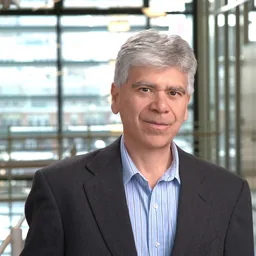
Fred Brown is Professor of Law and Director of the Graduate Tax Program at the University of Baltimore School of Law. He has been with the program since 1990 and has trained generations of tax lawyers across the country. The Graduate Tax Program offers both an LL.M. in Taxation and an M.S. in Taxation and pulls full-time faculty alongside tax court judges, IRS Office of Chief Counsel attorneys, and former DOJ Tax Division leaders as adjuncts.
Brown started his career as an electrical engineer at Rutgers, then earned his J.D. summa cum laude from Georgetown University Law Center and his LL.M. in Taxation from NYU School of Law. He practiced tax law at Shaw, Pittman, Potts & Trowbridge in Washington, D.C., taught for two years at NYU as an acting assistant professor, and then joined UBalt in fall 1990.
From 2000 to 2001, Brown was one of approximately forty academic advisors to the staff of the Joint Committee on Taxation during its simplification study of the federal tax system mandated by the Tax Reform Act of 1986. He is co-author with Walter Schwidetzky of Understanding Taxation of Business Entities (Carolina Academic Press, 2nd ed., 2021), and his published scholarship spans corporate taxation, international tax, accrual taxation, and tax-exempt finance.
In This Episode
- From Rutgers electrical engineering to Georgetown law school, and why engineering is good preparation for tax law
- Choosing UBalt over other schools in 1990 and why the graduate tax program is what drew him
- Two years teaching as an acting assistant professor at NYU and what student evaluations taught him
- Walter Schwidetzky, Wendy Gerzog, Jack Lynch, and the early UBalt tax faculty
- How Howard Dawson founded the program in 1987 and started the Tax Court judge teaching tradition
- Recruiting IRS Office of Chief Counsel attorneys and former DOJ Tax Division leaders to teach in Baltimore
- Advice for aspiring adjunct professors: who to contact and what programs look for
- Coaching the tax moot court team for 30+ years and the reward of watching students grow
- Advising the Joint Committee on Taxation during the 2000-2001 simplification study and why almost none of it was adopted
- Why international tax law keeps getting more complicated, even when Congress tries to simplify
- The Glen Frost pipeline: from JD student at UBalt to founder of an 80-person tax firm
- What running nine marathons (Boston, Marine Corps, New York City, Baltimore) taught him about teaching
- Career advice: take the tax job and do the LLM at the same time
Lessons from a career building a graduate tax program
And let me say, when you're looking for a job as a law teacher, it's a little bit like being a professional athlete. There's only so many jobs out there. There's 200 law schools. At any given time, they're all not looking for new professors and they're all certainly not looking for tax professors.
Fred Brown
Timestamps
- 0:00 Cold open
- 0:18 Electrical engineering at Rutgers, the law school choice
- 3:30 Choosing UBalt over other schools in 1990
- 6:14 Arriving at the program, NYU teaching experience
- 10:00 Reflecting on year one at NYU
- 10:31 Walter Schwidetzky and the early UBalt tax faculty
- 12:15 Tax Court judges, Howard Dawson, the DOJ pipeline
- 14:53 Advice for aspiring adjunct professors
- 17:07 Rewarding student outcomes and tax moot court
- 20:00 Advising the Joint Committee on Taxation, 2000-2001
- 22:22 Why international tax keeps adding complexity
- 24:20 The Glen Frost pipeline
- 26:18 Marathon running and preparation
- 28:28 Building a tax career, hindsight on Georgetown
- 30:19 Final advice: do both work and LLM
Resources & Links
- Fred Brown, University of Baltimore School of Law
- UBalt Graduate Tax Program
- Understanding Taxation of Business Entities, 2nd ed. (Carolina Academic Press, 2021), co-authored with Walter Schwidetzky
People Mentioned
- Hon. Howard A. Dawson, Jr., late Senior Judge and three-term Chief Judge of the U.S. Tax Court; longest-serving Tax Court judge (appointed 1962, served until 2016); founder of the UBalt Graduate Tax Program (1987)
- Caroline D. Ciraolo, Partner, Kostelanetz LLP (founder of the firm’s Washington, D.C. office); Adjunct Professor of Law, Georgetown University Law Center; former Acting Assistant Attorney General, U.S. Department of Justice Tax Division; UBalt Graduate Tax LL.M. alumna
- Glen Frost (Episode 7)
- Walter D. Schwidetzky, Professor of Law, UBalt School of Law; Fred’s mentor and co-author of Understanding Taxation of Business Entities
- Wendy Gerzog, retired Professor of Law, UBalt School of Law; tax and estates scholar
- Jack Lynch, retired Professor of Law, UBalt School of Law
- Don Stone, retired Professor of Law, UBalt School of Law; Fred’s first marathon training partner
Schools & Organizations Mentioned
Transcript of the Opening Conversation
Read the opening transcript
ALEX POWELL: What was it like telling Congress what’s broken?
FRED BROWN: I always tell people the best way to learn a subject is to teach it.
ALEX POWELL: What does distance running teach you that’s useful in tax law or in building this program over decades?
FRED BROWN: Diligence and preparation.
FRED BROWN: Success breeds success, right?
ALEX POWELL: So Fred, you started as an electrical engineer at Rutgers. What was the moment the law pulled you away from engineering?
FRED BROWN: It actually pulled me away even before I started as an electrical engineering major. So when I went to college, I sort of had it in my mind I was going to go to law school after college. And I really can’t tell you why. I don’t know. Growing up, things were maybe not different, but there’s only like a few professions that I sort of were thinking about. One was being a lawyer. One was being a doctor, possibly being an engineer. So it seemed to me that law was probably the better choice among those different professions. But I also had proclivity for like math and science. When I went to college, I said, well, I think I’d rather major in something more scientific. So I got into Rutgers School of Engineering.
I’ve convinced myself over the years, I think it’s a very good background for law. Because engineering or any kind of hard science requires you to think analytically, to work your way through very dense material and problem solve. As far as tax law, I think engineering and tax law, there’s a lot of common elements there. You’re dealing with complicated formulas all the time. These code provisions are just a bunch of, I think, verbal formulas. And it takes a lot of the same skills that you need as an engineer to work your way through these complicated formulas and very dense material. After I went into law school and then I started practicing and then in academia, I’ve seen it’s not that uncommon to see tax lawyers having a background in math and science. People I worked with when I was practicing, one was an engineer and the other one was a physics major. So I think it was more happenstance than anything, but I do think it turned out to be a very good preparation for what I ended up doing.
ALEX POWELL: You graduated from NYU for your tax LLM. Then you chose UBalt.
FRED BROWN: So choosing UBalt, first of all, I was excited by the fact that they had a graduate tax program, whereas other schools that I was looking at. And let me say, when you’re looking for a job as a law teacher, it’s a little bit like being a professional athlete. There’s only so many jobs out there. There’s 200 law schools. At any given time, they’re all not looking for new professors and they’re all certainly not looking for tax professors. So it is somewhat limited. UBalt’s grad tax program excited me because it gave me the opportunity to teach multiple tax courses, whereas your typical law school that doesn’t have a grad tax program will offer basic tax, maybe corporate and partnership tax, but probably not much beyond that.
I joined UBalt in fall of 90, and the program began in the LLM, and the program began in fall of 87. And actually UBalt actually had an MS in tax program, I think it was started in the early 80s. So in fall of 87, they added the LLM program, and then they made it this combined graduate tax program. It wasn’t my doing, although I do think it’s a great thing to have accountants and lawyers and even law students in the same classroom. Students make really interesting points as well, especially the students that we have at UBalt. Almost all of them are working either part-time or full-time, most of them full-time. And they have a lot of experiences they could share. So I do think it’s a very enriching environment to have accountants and lawyers in the same classroom.
ALEX POWELL: You arrived in fall of 90 to the program. What was the first thing you knew that you wanted to change?
FRED BROWN: I had prior teaching experience at NYU. So after I got my LLM in tax, and actually while I was getting my LLM in tax, I discovered that NYU will hire for temporary teaching positions people to teach for maybe a couple years after getting an LLM. The people in the current LLM class are people that they’re thinking about hiring if they’re interested to work as what they call an acting assistant professor for either one or two years thereafter. So when this opportunity arose, I applied and I was fortunate enough to receive it.
At NYU, they had the new professors teaching often a course that maybe the full-timers didn’t want to teach. So it was tax practice and procedure. I taught that. And then I taught another course focused more on IRS administrative material. It was the full realm of tax practice and procedures, basically looking at all the deficiency procedures, the refund procedures, penalties, and not surprisingly they didn’t want to teach that. They were very helpful people at NYU, they would give me their notes and things like that, but I was more or less on my own first semester. But I got tons of feedback from my student evals and that really helped me a lot, because I really didn’t know exactly what I was doing.
When I was in law school, law school was pretty much, as far as professors were concerned, more of an audio experience rather than a visual audio experience. As most professors did not use even the blackboard. They’d scribble something once in a while, but it was pretty much one-dimensional. And that’s something I tried to incorporate right away. Starting at NYU, I was really heavy with board use, diagramming things, writing out shorthand the formulas. And that’s something that I continued at Baltimore. Then around 15 years or so ago, I basically switched over to PowerPoint, but kind of using the same thing. I tried to make it a multi-dimensional experience, not just a talking head.
ALEX POWELL: How often do you reminisce about that first year of teaching at NYU?
FRED BROWN: It was a learning experience. It wasn’t great. So I do look back sometimes at some of the things I didn’t do right. For example, I was doing a lot of lecturing. I was doing a lot of reading of my notes. I mean, today, I almost never read notes. Part of it was nerves and not exactly knowing what you’re doing. So yeah, I look back sometimes at things that I certainly could have done better.
ALEX POWELL: Fred, walk me through those early days of the program.
FRED BROWN: Walter Schwidetzky, who’s still teaching at the school, was my prime mentor. And he was very helpful. I still have notes from my discussions with him about bouncing ideas off him as far as not just law, but teaching as well. Another colleague of mine at the time was Wendy Gerzog. So we would have a lot of conversations as well about teaching tax. We used to have also Jack Lynch. Both Jack and Walter have retired now, but Jack was also very helpful as well because he taught some tax courses. We used to have for a while like sort of tax lunches, like the tax group would go out to lunch and we would discuss teaching tax or tax in general.
I remember when I was a summer associate, I had a job in Atlantic City after my first year of law school. And there was one tax person in this law firm. He said to us, the difficulty about being the one tax person is there’s nobody to talk to. And what he meant was there’s nobody really to bounce ideas off of. Tax is a very difficult area. And that’s another advantage that UBalt at that time was that you had multiple tax professors that you could just run ideas by and just sanity checks and the like.
ALEX POWELL: And your faculty has included Tax Court judges, IRS chief counsel attorneys, the former head of the DOJ Tax Division. How do you pitch Baltimore to that?
FRED BROWN: Well, part of it was historical. The program began in 1987. And actually the founder of the program was a Tax Court judge. His name was Howard Dawson. He passed away about 10 years ago. I believe he took a temporary leave of absence from the Tax Court. He had some kind of professor status for a couple of years. He had a lot of credibility. He and Professor Schwidetzky were the ones that really put the program together, and Jack Lynch as well. But it was Judge Dawson who kind of took the lead there. So Judge Dawson taught on the program for a few years and then convinced some of his colleagues to do the same. So ever since 1987, we’ve always had a Tax Court judge that has taught on the program. So part of it is just that Judge Dawson started this tradition and other judges followed it.
Today it doesn’t matter as much because we have all of our classes now are online. But going back even just a few years, we would have in-person classes. So having proximity to Baltimore was important. And it was convenient for not just the judges, but for IRS personnel to want to come to Baltimore to teach. Once you sort of get that pipeline going, we’re well known now among IRS Office of Chief Counsel. As far as being a head position in DOJ, Caroline [Ciraolo]’s a graduate of the program. So she graduated the LLM program, I think it was right around the early, mid-90s. She’s been really very good to us as far as wanting to teach in the program, giving something back. So there’s a lot of this historical and proximity and other factors that allow us to really get excellent, not just judges, but IRS officials to teach in the program.
ALEX POWELL: There’s someone out there listening perhaps who wants to be an adjunct professor in tax law. What would you advise them?
FRED BROWN: It depends on the area, but schools are usually looking for people to be adjuncts. So there are a lot of opportunities there. Initiative, reaching out to the law schools. Usually the people at law schools that make these decisions are the associate dean for academic affairs. Reach out to those people. Or if you’re interested in teaching in a graduate tax program, obviously the director of the program. So if you’re an expert in a certain area and that school has a need, apply, put your best foot forward. As far as what we look for in adjuncts, not just interest and expertise, but if somebody has experience in doing CLEs or other sort of public presentations. That’s very helpful to give the people making decisions some information about your experience of presenting material.
The thing about adjunct teaching is that it requires a tremendous amount of dedication. These people are all working full time. The very first time you teach a course, no matter how expert you are, there’s a lot of preparation that goes into it. Because even if you’re an expert in a certain area, there’s an excellent chance that you don’t know everything super well, so you have to make sure that you have the other things down. I always tell people the best way to learn a subject is to teach it, which I think is true. Because you really, you want to not just be prepared as far as teaching the material you expect to cover in class, but you want to try to anticipate as well, like other issues that maybe are tangential, that students are interested in, that you might get questions on. So you really do have to be fully into the material and prepare quite a bit beyond just what you intend to cover in class.
The conversation continues in the Subscriber Edition.
Fred Brown turns next to student success, three decades coaching tax moot court, tax simplification, changes in practice, and advice for new tax lawyers.
Next on Cited Authorities
Glen Frost →Glen Frost →
Continue with Fred Brown
The Full Subscriber Edition is $9 a month or $90 a year. Paid members get the complete video of this conversation and every new Subscriber Edition.
Get the Full Subscriber Edition