Why Direct Examination Is Harder Than Cross | C. Evan Stewart
"History is a lot of serendipitous events. To say something was inevitable, that's not history."
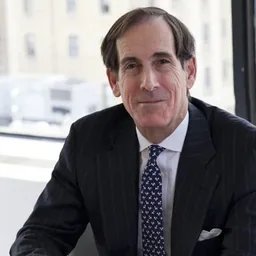
About the Guest
C. Evan Stewart practiced law for more than 47 years, retiring from Cohen & Gresser LLP in 2025. His practice focused on securities and financial services litigation and professional responsibility, and he is one of the few Wall Street trial lawyers who tried major cases in private practice without ever coming up through a federal prosecutor's office.
He taught law for three decades, including at Fordham, Cornell, and Brooklyn Law School, and has been a contributing columnist for the New York Law Journal since 1990. Over the course of his career he has published roughly 300 articles on securities law, professional responsibility, and legal history.
Stewart is also a prolific author. His books include The Worst Supreme Court Decisions Ever and his newest release, William Henry Seward's Quest to Save the Nation During the Secession Winter, which examines the decisions made in the winter of 1860 and 1861 that led to the Civil War.
He earned his undergraduate degree at Cornell University, where two professors first introduced him to the life of William Henry Seward, an interest he carried for more than five decades before writing the book.
In This Episode
- Looking at the legal profession from outside it: correcting public misperceptions about the Supreme Court
- Three seismic shifts over five decades: the internet and e-discovery, the compensation obsession, and the post-COVID mentorship gap
- Where AI fits in: the disconnect between young lawyers who understand the technology and senior lawyers who have to supervise them
- Trial philosophy traced back to one moment in law school: watching Irving Younger's hands tremble before a talk to second-year students
- Why direct examination is harder than cross-examination, and why the only real tool on direct is preparation
- The rule for witness preparation: the witness has to be the same person on cross that the jury saw on direct
- "Nice young ladies don't commit securities fraud": the Texas arbitration story, and what it taught him about our need for cognitive consistency
- In-house lessons from serving as general counsel at a Japanese securities firm and head of litigation at EF Hutton
- Teaching professional responsibility at Fordham, Cornell, and Brooklyn Law School
- The Salomon Brothers case: a general counsel who did everything right and still lost his license
- Advice for law students facing risk: recognize it, slow down, and get outside judgment
- Writing William Henry Seward's Quest to Save the Nation During the Secession Winter, and why Lincoln's decision to resupply Fort Sumter, not fate, started the Civil War
Timestamps
- 0:00 Cold open
- 0:26 Introduction
- 1:27 What surprised him most, looking at the profession from outside it
- 4:22 The internet, e-discovery, and the technology gap between generations
- 9:00 AI, the billable hour, and where leverage shifts next
- 9:51 Remote work, mentorship, and a recent SEC trial win
- 12:25 Trial philosophy: Irving Younger and the trembling hands
- 16:24 Why direct examination is harder than cross, and how juries spot a performance
- 19:35 "Nice young ladies don't commit securities fraud": the Texas arbitration, and what it taught him about our need for cognitive consistency
- 24:18 In-house counsel: general counsel at a Japanese securities firm, head of litigation at EF Hutton
- 27:27 Teaching professional responsibility at Fordham, Cornell, and Brooklyn Law
- 30:08 The Salomon Brothers case and the impossible position of general counsel
- 39:58 Advice for law students: recognize the risk, slow down, get outside judgment
- 42:29 Writing "William Henry Seward's Quest to Save the Nation During the Secession Winter"
- 49:55 Could Seward's strategy have prevented the Civil War?
- 57:09 Reconstruction's unfinished work, and why the Civil War wasn't "inevitable"
- 1:00:57 A personal connection: family history from the Battle of the Bulge to Selma
- 1:01:28 Where to find Evan's books, and closing
Resources & Links
- C. Evan Stewart, Retired Trial Lawyer, Cohen & Gresser LLP
People Mentioned
- Irving Younger, Legendary trial-advocacy professor; Evan’s law-school teacher
- Joel Silbey, Cornell historian who first introduced Evan to William Henry Seward
- William Henry Seward, U.S. Secretary of State; subject of Evan’s latest book
- Abraham Lincoln, 16th President of the United States
- Myron C. Taylor, Industrialist and diplomat; subject of another of Evan’s books
- Theodore Powell, Alexander Powell’s grandfather; author of The Long Rescue (1960); 42nd “Rainbow” Division, WWII; deputy mayor of Manchester, Connecticut, and a founder of its community-college system
Transcript of the Opening Conversation
Read the opening transcript
[Cold open]
C. EVAN STEWART: History is a lot of serendipitous events, a lot of things that happen, and then this causes that to happen, this causes that to happen. I mean, look at how World War I happened. No one could possibly have predicted that the assassination of the Archduke would have led, at that point, to the worst war in human history, to be only dwarfed by World War II. No one could possibly have predicted that assassination would have caused World War I.
ALEX POWELL: The slings and arrows of outrageous fortune.
Welcome to Cited Authorities. My guest today is C. Evan Stewart. Evan is a retired lawyer, teacher, author, and longtime legal columnist. His career includes senior financial services roles, securities and financial services litigation, professional responsibility work, decades of teaching, roughly 300 legal articles, and recent books on legal and American history, including William Henry Seward and The Secession Winter, which I have here today. Evan, welcome to Cited Authorities.
C. EVAN STEWART: Thank you, Alex. It’s a pleasure to be with you.
ALEX POWELL: Your author bio says that you retired in 2025 after more than 47 years practicing law. Of course, now you have a subsequent career as a prolific writer. What has surprised you most about looking back on the profession, the practice of law, from just outside of it?
C. EVAN STEWART: Now that I’m outside of it, I don’t think of it too much, other than when I’m talking about my second book, which people ask me about quite a bit: The Worst Supreme Court Decisions Ever. So to the extent I’m focused on the legal profession now, it’s mostly about the court. The book I wrote about the court, and people’s current perceptions about the court, more importantly, Alex, misperceptions about the court.
The amount of misinformation, and thus misunderstanding, about what the Supreme Court has done and is doing is very disheartening. If people only read, for example, certain East Coast newspapers, and only watched certain cable news shows, they would have a completely wrong, totally misguided understanding of what the Supreme Court is doing. To that extent, that’s been my focus on the legal profession since that book came out and I stopped practicing law. And I’m still very, very interested in that.
But reflecting back on the legal profession, now that I’ve been out of it almost 50 years, it’s amazing how much it’s changed. I told my law students, for the over three decades I taught, that the change is getting faster all the time, and the idea that pace of change is going to slow down anytime soon is simply illusory.
Just the impact of AI on the legal profession, we’re already seeing. Who could have predicted five years ago that AI would have this potentially revolutionary impact on the way people practice law? No one saw that one coming at all. And so where are we going to be five years from now? That’s a fool’s errand to try to predict. But all I know is it’s going to be really different in another five years than it is even today. So that’s something that, when I reflect back, when I got out of law school in the 1970s, boy, it is really different for young lawyers starting law practice, for people in mid careers, and for older lawyers like myself.
ALEX POWELL: Can you think of any seismic shifts that are comparable to AI that happened throughout your career, with the advent of the internet or other technological developments, and how you managed to thrive throughout that change? And then, offering advice to younger attorneys who are no doubt going to experience similar seismic shifts.
C. EVAN STEWART: Yeah, no doubt the internet changed law practice quite a bit, just by the way lawyers and their clients communicated with one another, and that was not necessarily for the better, frankly, and also the way information is stored. When I started law practice, document production really was document production: you went to a warehouse and selected documents to be copied. That’s not the way document production has been done for quite some time now, because of the internet. So that’s changed a lot.
And that dynamic, I think, is a very dangerous one for young lawyers, because it’s the young lawyers who understand technology, but it’s the older lawyers who don’t understand the technology who are supervising the young lawyers as to what they should be looking for. So there’s a very important potential disconnect there between the older supervising lawyers, who really don’t understand: when someone says there’s 75 gigabytes of information we have to go through, someone my age really doesn’t know what that means, but more importantly, knows how to direct someone your age or younger to go and make sure you get not just some of the relevant materials, but all of the relevant materials. Because at some point in the process, in the trial, you’re going to be making a certification to a court that all of the relevant materials have been produced. As an older lawyer, you’re completely clueless to make that certification, because you don’t understand the technology well enough to really know whether that’s true or not. But a younger lawyer maybe hasn’t looked in all the right places, because the older lawyer didn’t tell him or her to look in this place or that place, they just used their own judgment, based upon nothing, because they just got out of law school, to say, “I’m going to just look over here,” and they didn’t look over here as well. So that’s very dangerous, for sure.
The other thing I would say is a seismic shift, and this happened in the earlier part of my career, but it’s continuing to have a huge impact on the profession, is this overwhelming obsession that lawyers have with their compensation, which thus directly ties to client loyalty, loyalty to your partners, or non-loyalty to your partners. It used to be that you joined a law firm out of law school, and if you were lucky enough to make partner, you stayed there for your entire career. That was the paradigm. That paradigm has completely changed. I’m not going to say for better or for worse, I’m just going to say that’s completely different today. But the amounts of money that people now want to be paid, think they should be paid, and if they’re not being paid, they leave for some other place, stay there for two years until they go to another place to stay for another two years. That’s very different, and I don’t know whether that’s going to stay the same or change too. But those are some of the things that, for sure, changed. Seismic changes.
ALEX POWELL: That’s sage wisdom, thinking about how perhaps, like you said, there could be a need in the market, a market gap that I don’t see any technology firm in the legal field filling, when it comes to younger attorneys, they may have more experience with AI and the technological shift that’s happening. But older, more experienced attorneys, of course, have a wealth of knowledge when it comes to the practice of law. So something to help bridge that gap, to help younger attorneys explain the technology to more experienced attorneys who may not be as familiar. That’s fascinating. I agree it’s a fool’s errand to try to predict with any certainty what the state of the practice of law, or the technology, will be within five years.
I don’t know what’s going to happen to the billable hour. I think that may eventually go the way of the dodo, maybe sooner than many people think, when it comes to the advent of AI, or the continuing use of AI within the practice of law. It’s going to be an interesting, perhaps, redistribution of leverage too, when it comes to larger firms, they may cut their headcount because of AI, and smaller firms may have more leverage to take on tasks, take on clients that even five years ago would have been impossible for them to take on because of a lack of capital and human labor. So it’s going to be very interesting to see how all this plays out within the next probably two to five years.
C. EVAN STEWART: Yeah, the other thing to factor into all that is the impact of COVID, which made people start working remotely. And I know there’s been a big push among some of my contemporaries in New York City to force people back into the office, and the partners are much more willing to come back to the office than the associates.
But that’s such an important part for younger lawyers, to learn how to be a lawyer, which is just to follow older folks around like me, to see what I do and why I do what I do. That’s how I learned to be a lawyer. And once you break that, and people are just sitting in their apartments doing whatever they’re doing, whatever assignments they get, but they’re not following someone to see how they prepare for a deposition and how they take a deposition, things of that sort, or how they do a deal, or whatever part of the law you’re in, that mentorship thing seems to have moved aside. I don’t think it’s really come back in the same way in the post-COVID era, and that will undoubtedly also have an impact on the practice of law.
ALEX POWELL: There are plenty of tangibles and intangibles that younger attorneys experience, they gain just by simply being around someone who has been there and done that a million times, and it’s like they could do it in their sleep. And of course, trial work and litigation, there is no other way to learn other than observing and doing alongside more senior attorneys.
C. EVAN STEWART: Before we went on the air, you asked me about the SEC trial that I recently had. One of my young partners came up to me after the trial, I don’t want to blow my own horn, but he was quite effusive in thanking me for all the lessons I taught him on how to examine witnesses and how to do the things that lawyers do. This was a partner. And I said, “I’m really just doing what the people who taught me did, X number of years before,” so I’m just passing on what you should be doing in another 20 years to somebody else. And that’s a really important part of learning to be a lawyer. And this was a fellow who was probably 34, 35 years old.
ALEX POWELL: Then you’re one of the few Wall Street attorneys who has tried many cases without being a federal prosecutor, that’s rare. I want to know more about your philosophy on trial work generally, and then more specifically about your philosophy on preparation, client counseling, and examination of witnesses, direct and cross.
C. EVAN STEWART: I was very lucky in law school. I had the greatest professor of trial techniques who ever lived, a guy named Irving Younger, you’ve probably never heard of him, and he was absolutely incredible. One of the things I’ll never forget: he was absolutely brilliant, the most brilliant public speaker I’ve ever seen. Charming, fascinating stories, just unbelievable. And his trial techniques course was simply incredible.
But I remember, as a second-year law student, he was giving a talk to the second-year class in the moot courtroom about something, I don’t even remember what the subject was, but it wasn’t some earth-shattering thing. And I was standing right next to him, right before he was about to start delivering his comments, and I’ll never forget looking at his hands, his hands were trembling. So here was this guy who’s the most accomplished, seemingly the greatest natural speaker I had ever seen to that point, or have ever seen since, and this guy was terrified about going out in ten seconds to talk to this group of nobody second-year law students.
And that has stuck with me for 50-some-odd years, that there is no natural. Here’s a guy who’s incredibly brilliant, seemingly born to do this, and he wasn’t born to do it. He had to learn how to do this just like the rest of us, who put on our pants one leg at a time. That was a very important lesson to me, because if he got nervous, then it’s okay to be nervous; if he needed to prepare to do something to do it well, then I could probably do the same thing. That gave me a lot of confidence that you don’t have to be a quote-unquote natural to actually do things pretty well on your feet, whether it’s to speak extemporaneously, to cross-examine witnesses, to deliver an opening argument, or whatever. So that has stuck with me, that lesson from 50-some-odd years ago, really like a blinding insight. So, to the extent I have a philosophy, it’s that anybody can do it if they work hard enough. And that’s sort of been ingrained in me.
What I would say on top of that is, I was incredibly fortunate that the first law firm I worked at was a very distinguished firm which had some of the best trial lawyers in the country, bar none. These were all men at that time. I got to work with these men, and not just watch them in action and prepare them for what they were going to do, but to just sort of absorb, we talked about this mentorship thing a minute ago, just to watch them, and again, realize that they’re human too, and how did they learn how to do all this stuff? And I could learn from just, literally, absorbing. And I did. These men were really quite extraordinary. I was very, very lucky.
So you asked also about cross-examining witnesses and direct examination, probably different arts. A direct examination is much more difficult than cross-examination.
ALEX POWELL: Well, that’s fascinating.
C. EVAN STEWART: You really don’t know, you ask this open, “What did you do next?” And then you have, okay, what’s coming out of this person’s mouth? Right? So you’ve got to prepare them, but not to the point of a script, because if a jury hears a script coming out of your witness’s mouth, you’re cooked. A lot of lawyers think witness preparation is having them memorize a script, it’s completely wrong. The most important thing for a witness is to be authentic, because a jury can smell an unauthentic person. I’ve seen jurors literally, when a person is halfway through their testimony, turning in the jury box, because they can’t look at this person, because they don’t believe them. They don’t like to be lied to, and they believe this person’s lying to them. At that point, you’re toast. Now, fortunately, this was happening to opponents, but if you see this phenomenon, you’re completely cooked.
If you want a philosophical point, this differentiation between cross and direct, a similar point: I always told witnesses, the most important thing for you to do is to be the same person on direct that you are on cross, or more importantly, the same person on cross that you were on direct. Because if I ask you all these softball questions, “What did you do next?”, and you’re feeling very, very comfortable, then when some guy like me comes on cross-examination and is putting words in your mouth and making you say yes to every question, pretty soon you don’t like that, because you feel like I’m a ventriloquist dummy and I’m just manipulating you. People don’t like that. But that’s what cross-examination is. So cross-examination is much easier, if you will, than direct, because I already know every answer to every question I’m asking you, because if you give me a different answer than the one I’m expecting, I have a document that you wrote that says you’re lying. Okay, is the jury going to like that? They’re going to like that I exposed you as a liar, but you’re toast. So yeah, you can give me a “no” answer to what has to be a “yes” answer: this is tails, tails, you lose, heads, I win, I win either way, it doesn’t really matter. So cross-examination, it really is much, much simpler, because, again, someone who knows what they’re doing, I already know every answer before you’ve actually opened your mouth.
ALEX POWELL: And I’m also thinking about how, for cross-examination, direct examination, a lot of tips and tricks, so to speak, out there. But one I haven’t heard, and that seems so intuitive, is the importance of consistency for the witness during witness preparation, talking about that importance of consistency on both direct and then cross, or, as you said, the importance of consistency on cross when the jury has already heard the responses to the direct-examination questions.
C. EVAN STEWART: If the jury sees a different person on cross than they saw on direct, whatever side you’re on, that witness, you’re toast. And that’s, in my experience, that’s the key to witness preparation: to have the witness understand that I’m there to protect you. Don’t worry about what the answer is. Be yourself.
I’ll give you a great example of this. I was trying a case in arbitration down in Texas years ago, and a lot of money was at stake. And the key witness was this very, very able, very bright woman who had gone to a fabulous university, gotten a fabulous MBA at the best business school in America, had this incredible career at the best investment banking firm in the country, if not the world. And this case was all about her, because the people who were suing were saying that she screwed up. And she thought this was going to be the end of her career. It was like, “I’ve never failed at anything, and I’m about to be pushed over the edge of Niagara Falls without a barrel, and this will be it, I’m dead.” I said, “No, no, no, no, no, no, no. Just take it. Calm down. We’re going to get you through this. This is all fine.” I told her some of these things I’d already told you about, being the same person.
And so we’re in the middle of this hearing, and she’s on the stand, and direct has gone very well. And then on cross, this guy is doing a pretty good cross on her, he’s asking her, “Isn’t it true that she has to say yes? Isn’t it true that she has to say yes?” Even when she takes a break, or we take a break, bathroom break, she goes to the ladies’ room, I’m sure to throw up, and I’m sitting there about seven or eight feet away from the arbitrators. And two of the arbitrators, I don’t remember the third, frankly, because that’s not important for the story, but two of the arbitrators were these very elderly, distinguished Southern gentlemen. And one of them turns to the next one and says, “What a nice young lady.”
I immediately jumped up, ran out of the room, stood outside the ladies’ room, and when she came out, said, “We’ve won the case.” She said, “What do you mean we’ve won the case? I just threw up. This is the worst moment of my life.” I said, “No, no, no, no. The arbitrators think you’re a nice young lady. We’ve won the case.” She said, “What are you talking about?” I said, “Nice young ladies don’t commit securities fraud. We’ve won the case.” I’ve told that story, it’s not the first time I’ve told that story, because that’s the key. If the arbitrators, or the jury, or whoever is deciding your fate, think you’re a nice person, that’s all you need to do.
So my job is to make sure that that personality is on exhibit, even when you’re being asked nasty questions, and you feel like there are a thousand other places I’d rather be than right here right now, this is horrible, no, be a nice person, and the same person you were on direct, and everything will be fine. So that’s my nice young lady story on how to be a good witness.
ALEX POWELL: Right. And, like you said, nice young ladies don’t commit securities fraud, and we have a desire for cognitive consistency, we don’t want to think that someone who’s a nice person could commit something that will degrade that image we have of them, so we’re going to look at things in a way that is consistent with that image. I think that’s something they don’t teach you in law school, and it’s a very practical skill to know about.
Getting a little bit more into the nitty-gritty, Evan, before you were outside counsel, you were general counsel at Nikko Securities International and head of litigation at EF Hutton. What did those in-house jobs teach you about what clients, corporate or otherwise, truly need from their lawyers?
C. EVAN STEWART: Yeah, so it’s a very different role for lawyers. I was in a private little firm for a number of years before I went and took the Hutton job. And then, after the Hutton job, I took the general counsel position at Nikko. It’s a completely different experience. You don’t have to worry about getting or retaining clients, because the client’s right there every day, 24-7. The demands on an in-house lawyer are very different, and it’s the challenge of having one client as opposed to many clients. Now, the job of head of litigation at a large financial services firm is different than being general counsel. So when I was at EF Hutton, there were a lot of fires going on all the time, and my job was to somehow manage that process, and within some degree of sanity, make sure that money that had come in wasn’t going out in the form of settlements or judgments at trial. I found that really interesting, and I had a great group of colleagues.
The Nikko thing was a lot more different, insofar as that was the American arm of a Japanese securities firm, one of the humongous Japanese securities firms, one of the largest in the world. And so we had a cultural and language issue as well to deal with. The Japanese legal system, completely different. The way people communicate, Japanese to Japanese, Japanese to American, Americans to Japanese, very, very different. So that was, in a sense, a very different learning experience, because one of the most important things for any lawyer is to have a very effective two-way street of communication between yourself and your client. And if the client has a cultural problem, they don’t talk to lawyers that way, number one, and number two, they don’t talk to gaijin, like Americans, that way. I’ve got to overcome both of those barriers to make sure the company is getting good legal advice and following that advice. So that was something new and different for me. I’m glad I had that experience, but that was different, for sure.
ALEX POWELL: Evan, you taught for many years at Fordham and Cornell and Brooklyn Law School as well, while you were practicing, what did teaching those students, year after year, teach you about the practice of law?
C. EVAN STEWART: I got into teaching initially because, there’d been one thing we talked about before we got on the air, and a little bit on the air, I was very concerned with some of the things that were happening in the legal profession, particularly insofar as they dealt with issues involving in-house corporate lawyers, which I was, at that point, when I started teaching. I thought some of the risks and challenges to lawyers in those positions, like myself, were reaching a point that was almost out of control. So I wrote a number of articles, and that led the Fordham people to ask me to teach professional responsibility. That’s how I got initially involved in that. Then Cornell came about a decade later and asked me to teach a course for undergraduates who wanted to go to law school. So I constructed an entire course, an introductory course, to give them a flavor for what it’s like to go to law school, a primer on the law school experience. And those are two very different assignments: the Brooklyn course was also a professional responsibility set of courses. So the two law school teaching assignments were pure ethics, and the Cornell one was much broader-based.
What did that teach me about the legal profession? As I say, the ethics course was a constant primer on how difficult it is to practice law, the challenges for people who represent public companies. Whether you’re an in-house lawyer at a public company or an outside lawyer representing one, there are a lot of risks that I didn’t think people were teaching law students about, that they needed to know about those risks, and that there were no easy answers to deal with them.
ALEX POWELL: Like what? Could you give some examples of those risks?
C. EVAN STEWART: Okay, so, what do you do if the boss, the CEO, doesn’t follow your advice?
ALEX POWELL: Right.
The conversation continues in the Subscriber Edition.
C. Evan Stewart turns next to Salomon Brothers, the general counsel’s role, advice for law students, William Seward, the Civil War, Reconstruction, and family history.
Next on Cited Authorities
Terry Lemons →Continue with C. Evan Stewart
The Full Subscriber Edition is $9 a month or $90 a year. Paid members get the complete video of this conversation and every new Subscriber Edition.
Get the Full Subscriber Edition