Running the CPSC and the Safe Rental Car Act | Pamela Gilbert
Pamela Gilbert spent years pressuring federal agencies from the outside before she was responsible for running one. As Executive Director of the U.S. Consumer Product Safety Commission, she inherited Congress, budgets, industry pressure, litigation risk, and a career staff of about 500. In this episode she explains what changes when you cross that line, and why access to the courthouse remains central to private enforcement.
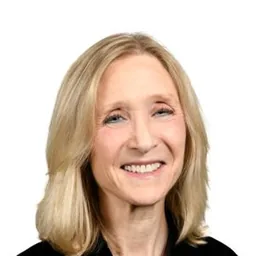
About the Guest
Pamela Gilbert is a Partner at Cuneo Gilbert Flannery & LaDuca, LLP, a firm focused on government relations, consumer protection, antitrust, and civil justice, where she has been a named partner since 2003. From 1995 to 2001 she served as Executive Director of the U.S. Consumer Product Safety Commission, the agency's senior staff position, supervising roughly 500 staff including 25 attorneys and growing the agency's funding by nearly 40 percent.
Before the CPSC, Gilbert was Consumer Program Director at U.S. PIRG and Legislative Director and later Executive Director of Public Citizen's Congress Watch. Her more than 35 years of consumer advocacy in Washington include over 50 congressional testimonies, leadership of the Obama Presidential Transition Team for the CPSC in 2008, and legislative wins including the Raechel and Jacqueline Houck Safe Rental Car Act of 2015.
She earned her J.D. at New York University School of Law as a Root-Tilden Scholar and her B.A. magna cum laude from Tufts University. She chairs the board of the American Antitrust Institute, which inducted her into its Private Antitrust Enforcement Hall of Fame in 2023, and serves on the board of the National Consumers League.
In This Episode
- Moving from outside consumer advocacy to running a federal agency, and what actually changes
- What the Executive Director of the CPSC does: budgets, Congress, industry pressure, litigation risk, and stewarding career staff
- Independent agencies and why their structure matters now
- The Raechel and Jacqueline Houck Safe Rental Car Act: the legislative strategy behind a consumer-safety win
- Antitrust consolidation and the state of private enforcement
- Why access to the courthouse remains central to public-interest law
- A career across U.S. PIRG, Public Citizen's Congress Watch, the CPSC, and private practice
Timestamps
- 0:00 Cold open: product safety over politics
- 0:14 From Tufts activism to Ralph Nader
- 4:13 Going inside the CPSC
- 7:55 Tiny budget, big bully pulpit
- 10:45 Lessons in regulatory realism
- 12:43 Independent agencies under threat
- 14:47 What agency independence really means
- 17:50 The Safe Rental Car Act fight
- 22:39 Flipping Hertz to pass the bill
- 25:58 Career advice for young lawyers
- 28:23 Antitrust and the anti-monopoly movement
- 32:48 Opening the courthouse doors
Resources & Links
- U.S. Consumer Product Safety Commission
- American Antitrust Institute (Gilbert chairs the board)
- National Consumers League (Board Member)
- Raechel and Jacqueline Houck Safe Rental Car Act of 2015
Transcript of the Opening Conversation
Read the opening transcript
PAMELA GILBERT: It was all about product safety. It wasn't about liberal or conservative or or what's the agenda of the president. It was about is this product hurting people? How? And how do we fix it?
ALEX POWELL: Walk me back to the beginning. How does a math major from Tufts end up spending a career on accountability?
PAMELA GILBERT: So thanks, Alex. That's a good question. And it really did for me start back at Tufts, where I was a college student many, many years ago. So I had always been in interested, even as a young kid, in social issues. I followed the news. I grew up in the Vietnam War era, and my whole family, we were very anti-war. And I was interested in that and saw on TV that the activism was at universities. So I go to Tufts University. Well, the activism era was pretty much gone by 1976, but I didn't realize that, right? I was going to college. For me, college equaled activism. And so I went to Tufts and I found my people, but I had to work at it a little bit.
PAMELA GILBERT: But found a group of people. We were a small little army. We called ourselves the Tufts Political Action Coalition. And I started working on social justice issues. I focused on South African divestment, anti-nuclear power. Jimmy Carter was in reinstituting registration and we thought maybe a draft. We were against that. Anyway, it was a group of us who worked on those issues. South African divestment, probably the biggest one for me. And I loved that work. So I was a math major, you're right, but I never wanted to pursue mathematics. I was just kind of good at it. And so I decided to major in it. I just love the activism. There was a professor who was a mentor of mine in my activism work.
PAMELA GILBERT: And as I was graduating, I said, Can you get paid and do this kind of work? And he said, Ralph Nader pays young people, hires young people to do this kind of thing. And I, if I were you, I'd go to Washington, D.C. and work for Ralph Nader. And I did. There was a way to apply with your resume to a large group of Nader connected groups. And I did that. And I got a position. So this was after college, before law school, at a group called the National Citizens Committee for Broadcasting, which did media reform work. It was an entry-level position. I was the office manager. But just coincidentally, very, very lucky coincidence, that in the same workspace, Ralph Nader's office was there.
PAMELA GILBERT: There are dozens of Nader connected groups in Washington, D.C. And I chose one that was housed where Ralph Nader worked. I had no idea. But I got to know Ralph and I got to know the people around him. And everybody who was doing the kind of work that I wanted to do, which was public interest lobbying, public interest advocacy, were all lawyers. And so that's that's I decided to go to law school and pursue that as a career.
ALEX POWELL: I believe I read some article some time ago, Pam, when you first agreed to be on the show, that Ralph spoke very highly of you two, and he predicted that you would have a career in public service correctly.
PAMELA GILBERT: He challenged me to that, actually. I I left after a year to go to NYU law school on a public interest scholarship that I got largely, I think, because of the work that I had done with Neater. And he happened upon my goodbye party, and he's like, What? You're leaving and you're going to law school? And he just was like, it's gonna corrupt you. You're gonna go work for some big corporate law firm. And I said, I am not. I'm not gonna do that. I have no intention of doing that. That's not why I'm going to law school. And so he sort of challenged me to come back to what he calls civic action, which I did, but I wasn't surprised because I knew that was my focus.
ALEX POWELL: After law school, you went from pressing the Consumer Product Safety Commission from the outside to later running it when you got inside. How did it change your viewpoint after having a career where you were pressuring governmental institutions to then running one?
PAMELA GILBERT: So I was working for public interest groups connected to Ralph Nader for about 10 years after law school. And I was working on product safety issues, working to pressure the Consumer Product Safety Commission to do the right thing, working on legislation to improve the work of the CPSC. And I knew the product safety community because of that. And when I first came to Washington, DC, for the first 10 years, we had Republicans as in office who are not as consumer protection oriented as Democrats are. And so we were fighting, it was the beginning of my career. I was fighting the administration to do the right thing. Then Clinton became president, which is my first experience with a Democrat as president, as I being a public interest lawyer in Washington.
PAMELA GILBERT: So that orientation had to change. All of a sudden, these were our friends who were in the administration. So I had worked with Ann Brown, who President Clinton named as the chair of the Consumer Product Safety Commission. So she asked me to meet with her before she got that job to say, I just want your thoughts. What do you know about CPSC? What do you think I should work on? And we met for about an hour, an hour and a half and took a liking to each other. We knew each other, but not that well. And it was some months after that that she called me up and said, Would you like to come to the CPSC and be my executive director?
PAMELA GILBERT: Up until that moment, I didn't have an aspiration to work in the government. And I almost said no. I wasn't planning on that. That wasn't part of the plan. But when I asked for advice from people, every single person said, You're crazy if you don't take this opportunity. You're young. This is a great opportunity for someone. So that's kind of how I got there. So I hadn't done a lot of thinking about like what would change because I hadn't really done a lot of planning. And you are right. It's very different. When you're working for a public interest group, there's a great freedom to be as tough as you want, to be as strong as you want. You need to do as much as you can.
PAMELA GILBERT: You need to get that product off the market. You need to do a recall, whatever the issue is. Once you're inside and you're the implementer, you have many more pressures on you. You can't always go that far because you've got political pressures, you've got Democrats and Republicans in the Congress. They control your money, they control your statute. It's an independent agency, or at least it is until the Supreme Court changes that. And so you don't necessarily as at the CPSC report to the president, but you are serving in the president's administration. And so there's just a whole, and then you do have to work with the industry. And so who can sue you if you step over a line?
PAMELA GILBERT: And challenging education for me to not always be able to say yes to all the consumer organizations who are my friends, and to just be smart and to be a steward, a really an important steward of the for the taxpayers and of that agency. So, but having said all that, I will say that my chairman, Ann Brown, was one of the most aggressive regulators that the CPSC has ever seen. And so working with her and for her was a great, we did have a lot of freedom to push the industry pretty hard for safety.
ALEX POWELL: You mentioned several bottlenecks that are not present when you're outside the government, or at least not to the same degree. Was the bottleneck most often legal authority or money process or industry resistance? Or was it a mixture of all of those things?
PAMELA GILBERT: So it's all of those things, but I have to say I think for CPSC specific, and especially at that time, we had a very small budget, tiny budget, and just very, you know, not enough people and not enough resources to do the job. So when I used to give little speeches when I was executive director of the CPSC, one of my sort of lines in my speeches were that, and I don't know how this is today, but back then, the Pentagon spent the CPSC's annual budget every hour and a half just to give you some kind of perspective. Now, of course, the Pentagon is huge, but that shows how what a tiny, tiny little agency we were. And so we had to be really smart. And so what Ann Brown did, I think, to great effect, is she used her bully pulpit and her ability to get press, get on TV to force companies to do the right thing when it comes to safety, as opposed to always either bringing a lawsuit or passing a regulation, because those are very expensive, resource, time-consuming activities.
PAMELA GILBERT: And so she would always want to like sort of get to the results quicker. And that's what she would do and go on TV and call them out, or even raise the possibility that she could go on TV with this. And aren't we all better off if we just work together and fix the problem? She's focused on being a pragmatist and what actually works. And you're the same way I know. And it really worked well. And one of the nice things about working at the CPSC, which is maybe different from a lot of other federal agencies, it's what we do affects the public immediately. And it's something that the public understands. Like cribs, this is a crib that's unsafe and we're doing a recall. That you don't have to explain that to anybody. They get it. These are products that they see on their store shelves or in their homes, and they use them every day.
PAMELA GILBERT: And so we get their attention when we tell them that one of them may be dangerous for them or for their families. So that's a great advantage as a regulator, that we could really reach the public pretty easily with an understandable message. No metaphors are required to explain to the public the importance of an unsafe crib. That's it's apparent how dangerous that is. As opposed to some financial regulation that is important, but people don't understand how it works, right?
ALEX POWELL: Did you become more or less optimistic about regulatory capacity after your years in the CPSC?
PAMELA GILBERT: Probably less. I hate to say that, but probably less optimistic because more realistic, right? I just knew more and I knew how it worked. And I knew what had to go into a regulation or, you know, regulating an industry. And so, yeah, I think I was much smarter about the process when I came out and more forgiving, honestly, of the government employees who have to do this work and understanding how hard it is and that they really do work hard. I mean, there are many times there were tears at the CPSC because a child had died and it was a product that we knew about.
PAMELA GILBERT: We knew it was dangerous, but the there was, we did a recall, but the product was still there. I mean, that really it hit people very personally. So these workers, the employees were very dedicated and worked very hard. So I was much more understanding of them and what they had to go through and what the process was coming out.
ALEX POWELL: That budget you mentioned as well, you understand deeply the constraints that are imposed upon these civil servants.
PAMELA GILBERT: After I was at the commission, there was a huge scandal back in 2007 where lead was being found in Mattel toys and Barbie dolls and Thomas the Tank products, really products that like everybody who had kids had had them in their house. And it became a huge bipartisan effort on Capitol Hill to fix whatever was going on at the CPSC that allowed those products to come in. They were being imported and then sold in the stores. After my time, the commission actually got a lot stronger and got a lot more money. The statute was strengthened and they got more money.
PAMELA GILBERT: It's not to say that it's ever been a powerhouse, but it was strengthened significantly for a while. We are now in a place where the Supreme Court is probably going to rule that all of the independent agencies, and CPSC is one of them, that to lose their independence, that the president actually has the right to fire people at will at those agencies. And if that happens, I think that we're gonna a whole slew of independent agencies are gonna lose a lot of their authorities, unfortunately.
PAMELA GILBERT: The terms are staggered. The president's party gets to have a majority, but only by one. And so they're meant to be as stable as they can be, not to change with political wins and to be expert, like their scientific or expertise is what's important in those agencies. And while the parties, like when the parties change, the orientation of the agencies definitely changes, the priorities change, but the actual fundamental work doesn't. It really doesn't, because they're not partisan. That's safety.
PAMELA GILBERT: A crib can can strangle a baby, and it doesn't matter what party the baby's parents belong to. The baby is gonna get hurt by the crib. These are universal issues. And when it gets politicized in the way that I think it's going to be, all of that goes out the window. And then you just have another political agency. Just can't see once the agencies lose their independence that they're gonna be nearly as effective as they are today.
ALEX POWELL: I wonder who stands to win from that, that arrangement on the private side, private sector.
PAMELA GILBERT: I don't think the regulated industries, and again, this is not just CPSC, but across the board, I don't think they're for that at all. Because one of the things that our regulatory system gives them is a lot of stability, in fact. And that, you know, just party to party is gonna just change everything every time the president's party changes, that's not good for business. So what it means to to for an agency to be independent is first of all, these commissions are run by their multi-member commissions. In the CPSC's case, it's a five-member commission. No more than three members of that commission can be of the president's party. So it's usually if it's Republican president, three Republicans, and two Democrats, and then the chair of the commission is gonna be of the president's party.
PAMELA GILBERT: And so, and the com but they vote. So it is true that if you have votes that are partisan, it could be three to two, and then the that party is gonna win. But what the commission structure plays to is consensus. And that's what you try is agree on most of what is is going to be happening at the agency. But much more important is the staff that doesn't change when the president changes. And these are career jobs. I remember when I first got to the commission and they were taking me around the agency to introduce me to people. When if if they introduced me to somebody who had been working at CPSC for 10 years, that was a short timer. That was somebody who would say, I've only been here for 10 years.
PAMELA GILBERT: People stayed for their entire careers there, and they developed tremendous expertise about the products that they were working on. And these were scientists, technical staff, human factors, engineers who, again, it was all about product safety. It wasn't about liberal or conservative or what's the agenda of the president. It was about is this product hurting people? How? And how do we fix it? And what do we do to fix it? And given that kind of wealth of non-political expertise, when things then would trickle up to the commissioners, usually there wasn't that much controversy. Usually they accepted the recommendations of the staff. Of course, there are differences of opinion where different commissioners want to go further or less far on a fix or on being tough on the agencies. And that can change with personalities that change at the agency.
PAMELA GILBERT: So there are disagreements. It's not always work on consensus. But what it isn't is political in the like capital P sense of, oh, there's an election coming up. So we better not do so many recalls because we want to make sure that the industry isn't mad and the president gets re-elected or something like that. Like that's just it just doesn't come into it. In fact, it would be illegal. As an independent agency, we're not allowed to get involved in the politics of what's going on. And so we were removed in that way. And it gives you tremendous freedom to just, regardless of the politics, stick to your job.
ALEX POWELL: Right. Right. And those civil servants, the short timers who've been there for 10 years as well, truly dedicated to that work.
The conversation continues in the Subscriber Edition.
Next on Cited Authorities
John Pontius →Continue with Pamela Gilbert
The Full Subscriber Edition is $12 a month or $100 a year. Paid members get the complete audio and video of this conversation and every new Subscriber Edition.
Get the Full Subscriber Edition